Act 04 — The artist

From Vilnius
to form.

Sculptor, medallist and painter. Born in Vilnius in 1942, she graduated with distinction from the Academy of Fine Arts in Warsaw in 1966. She worked in sculpture for half a century, from the medal to the monument, between Warsaw and Kotuń.

1942 Vilnius · Szczecin · Warsaw

Origins and training

Antonina Wysocka-Jonczak was born in Vilnius in 1942. From 1949 the family lived at Stargard, in Pomerania, where she took her first art classes.

She spent five years at the state art secondary school in Szczecin, then entered the Academy of Fine Arts in Warsaw at the first attempt, in the Faculty of Sculpture. She graduated with distinction in 1966, from the studio of Marian Wnuk. Already in her fifth year she won a medal competition: that is where the work on the medal begins, one of the constant strands of her career.
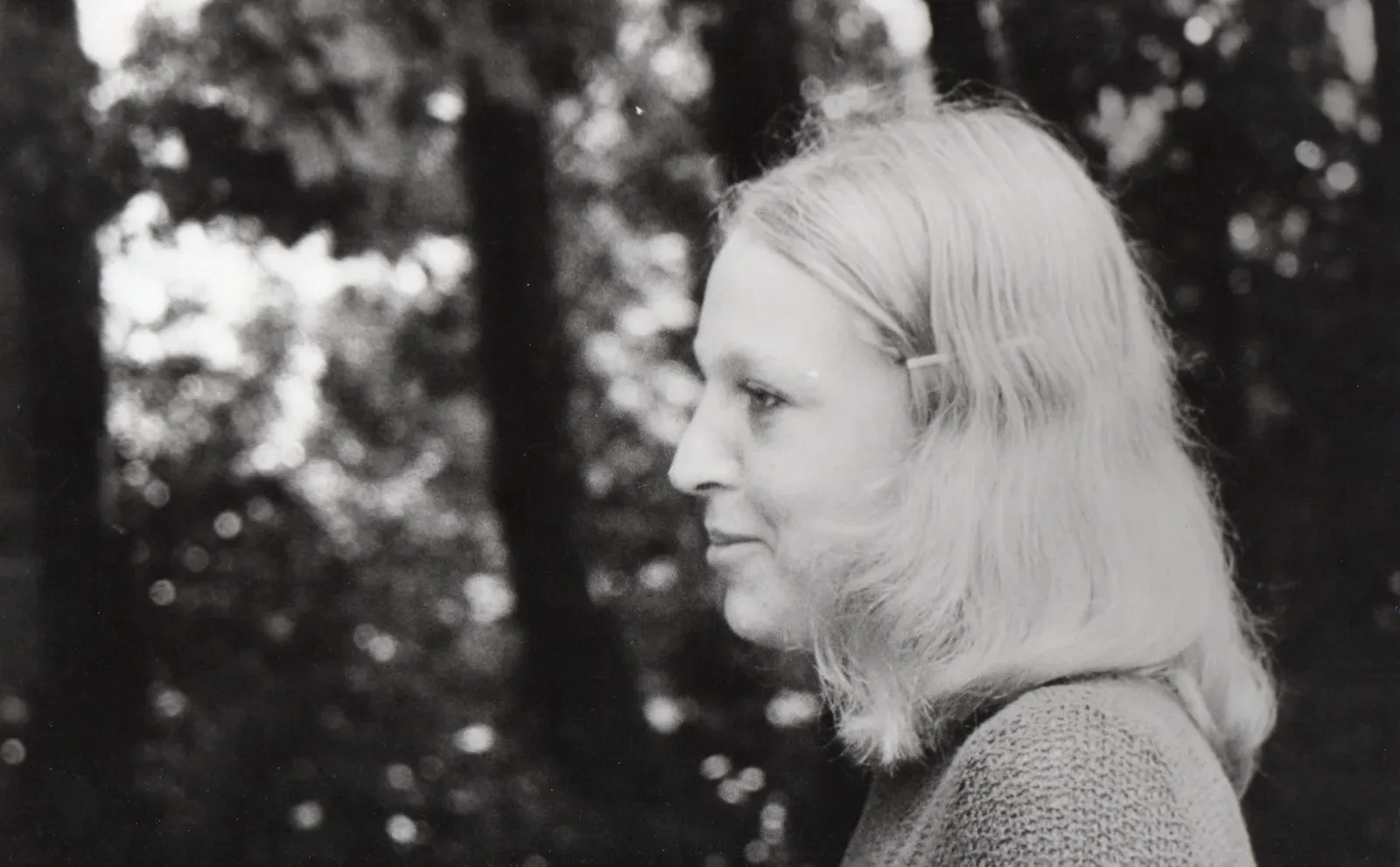
Antonina Wysocka-Jonczak in profile as a young woman, in a wood; black and white photograph
Portrait as a young woman, in a wood.
Poetics The Warsaw School

The language

Antonina belongs to the Warsaw School. Her language is anthropocentric: the human figure stays at the centre, rendered by metaphor and by subtraction — taking material away down to the essential sign.

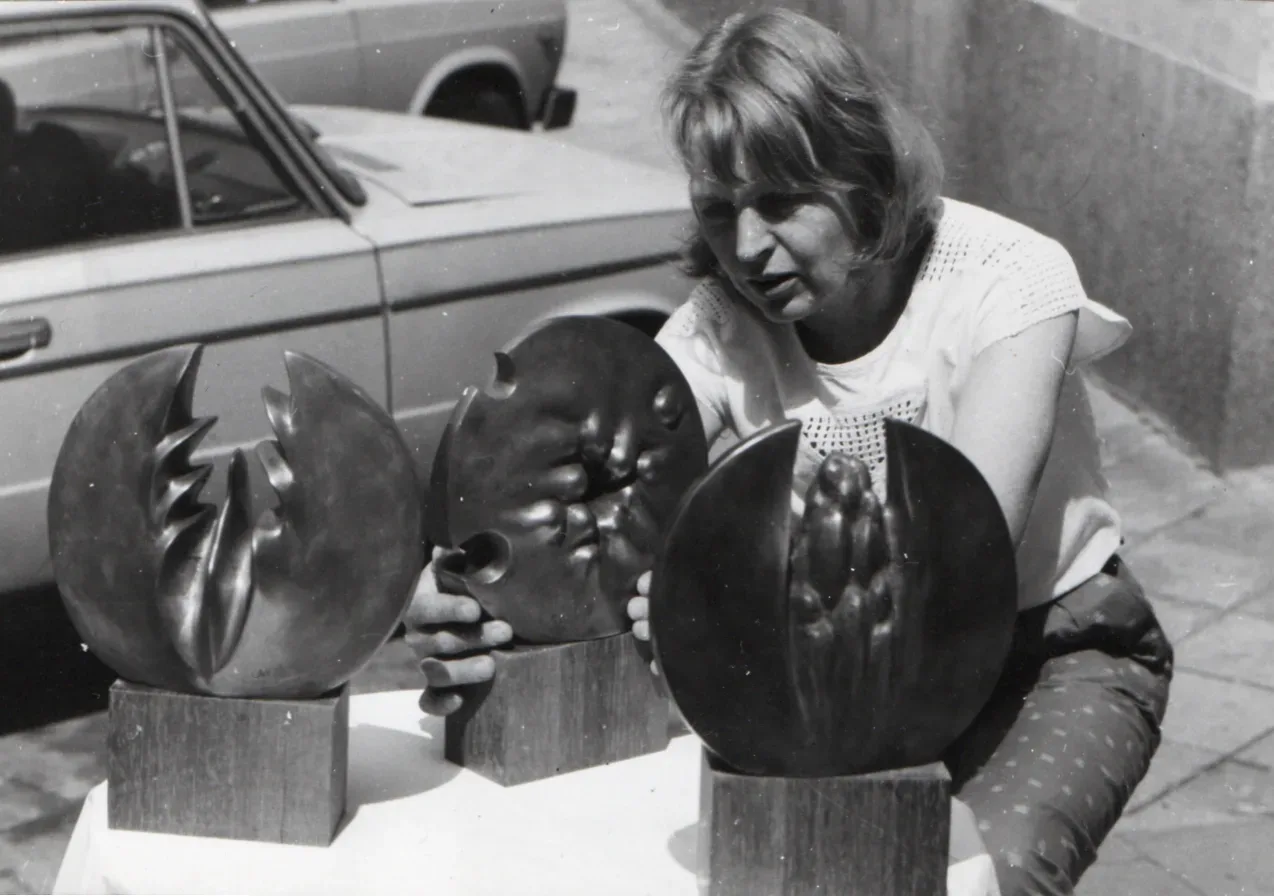
She worked in stone, wood and bronze, from the medal that sits in a hand to the monument; alongside sculpture she painted and drew. The forms are few and never return the same: the disc, the ovoid, the prism. One idea holds them together: every presence, even fixed in the hardest material, is already the beginning of its passing. From this comes the theme of the trace, which runs through the whole body of work.

Antonina bending over three bronze discs set on stands, in a black and white photograph
With three bronze discs.
1970–1997 Seven countries

The symposia and the public works

From the 1970s Antonina took the work outdoors. She joined the international sculpture symposia, where stone or wood is carved in front of the public, and made more than fifteen monumental works for parks and urban spaces.

They stand today in seven countries, from Poland to Slovenia, from Germany to Italy. In 1976 the oak «Sfera» entered the park at Forma Viva, in Kostanjevica na Krki; at the Auvergne Biennials, in France, she won the gold medal in 1989 and the Grand Prix in 1991.

from 1990 Kotuń, near Siedlce

The house-studio

From 1990 Antonina also worked at Kotuń, in the countryside near Siedlce, in a large house whose garden opens onto the woods. She divided the work between the Warsaw studio and the country, where some sculptures stood in the open air.

She exhibited in Poland and abroad throughout, from her first solo show in 1968 onwards. The main collection is today at the Muzeum Regionalne in Siedlce; other sculptures are at the Centrum Rzeźby Polskiej in Orońsko and in private collections in Europe and the United States.

Artist's statement

My sculpture is an inner fact: something that comes from the depth of the soul and seeks to communicate with the outside.

It is a sculpture of feelings, of emotions, which I want to render and try to express in clean, sharp forms, in symbolic and evocative images. In my work I try to transform what happens inside, to bring out the sensations, the changes, the states of mind — not as my own, single and personal, but as essence, as archetype of those states — trying to make tangible what is metaphysical and intangible: I try to give a real image to the abstract idea.

Antonina Wysocka-Jonczak From her papers, in Italian
The artist’s words

I am. Therefore what I make is the trace of my presence.

Jestem. Więc to, co czynię, jest śladem mojej obecności.

Antonina Wysocka-Jonczak