Ręce
Hands · Moravany nad Váhom, 1971
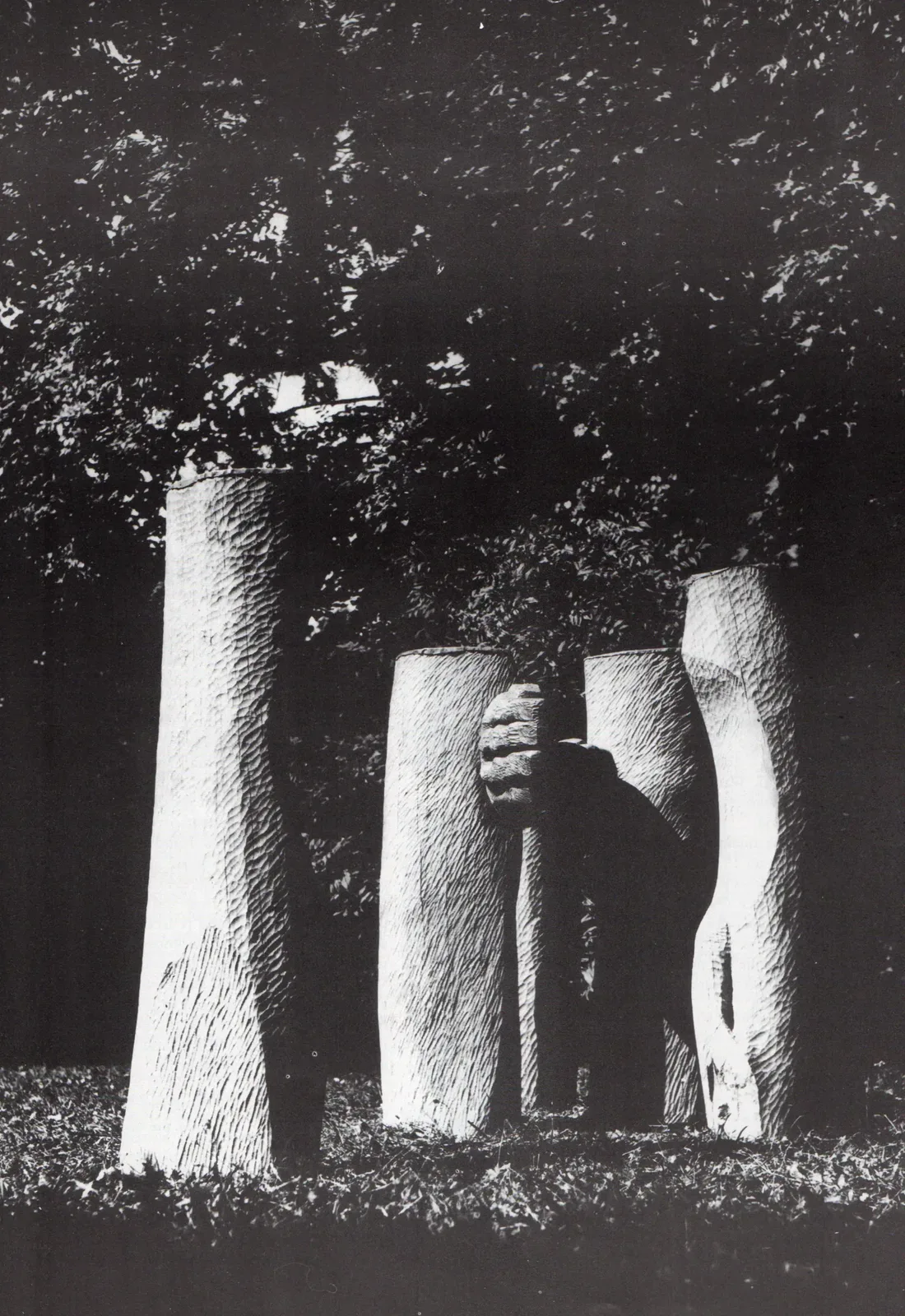
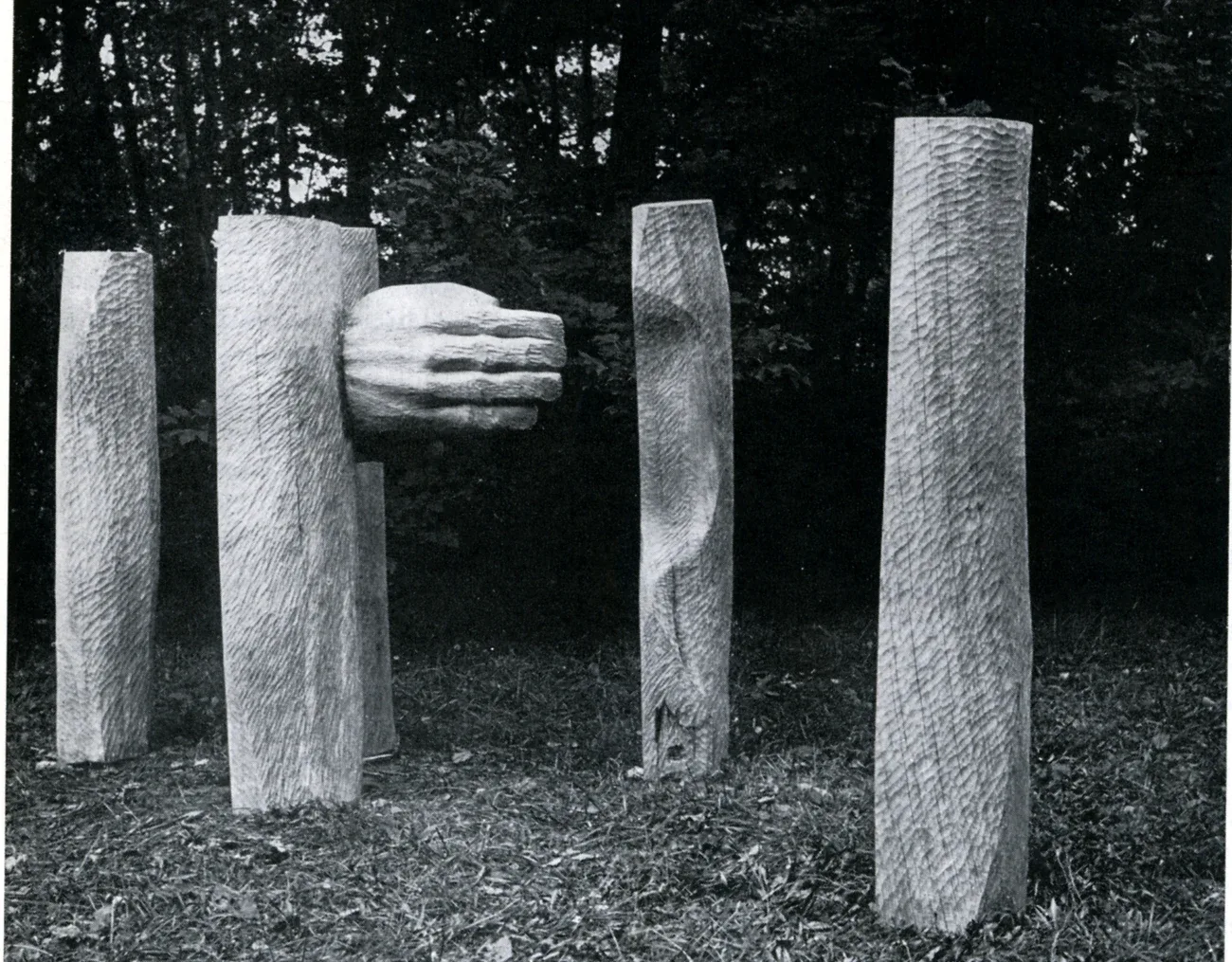
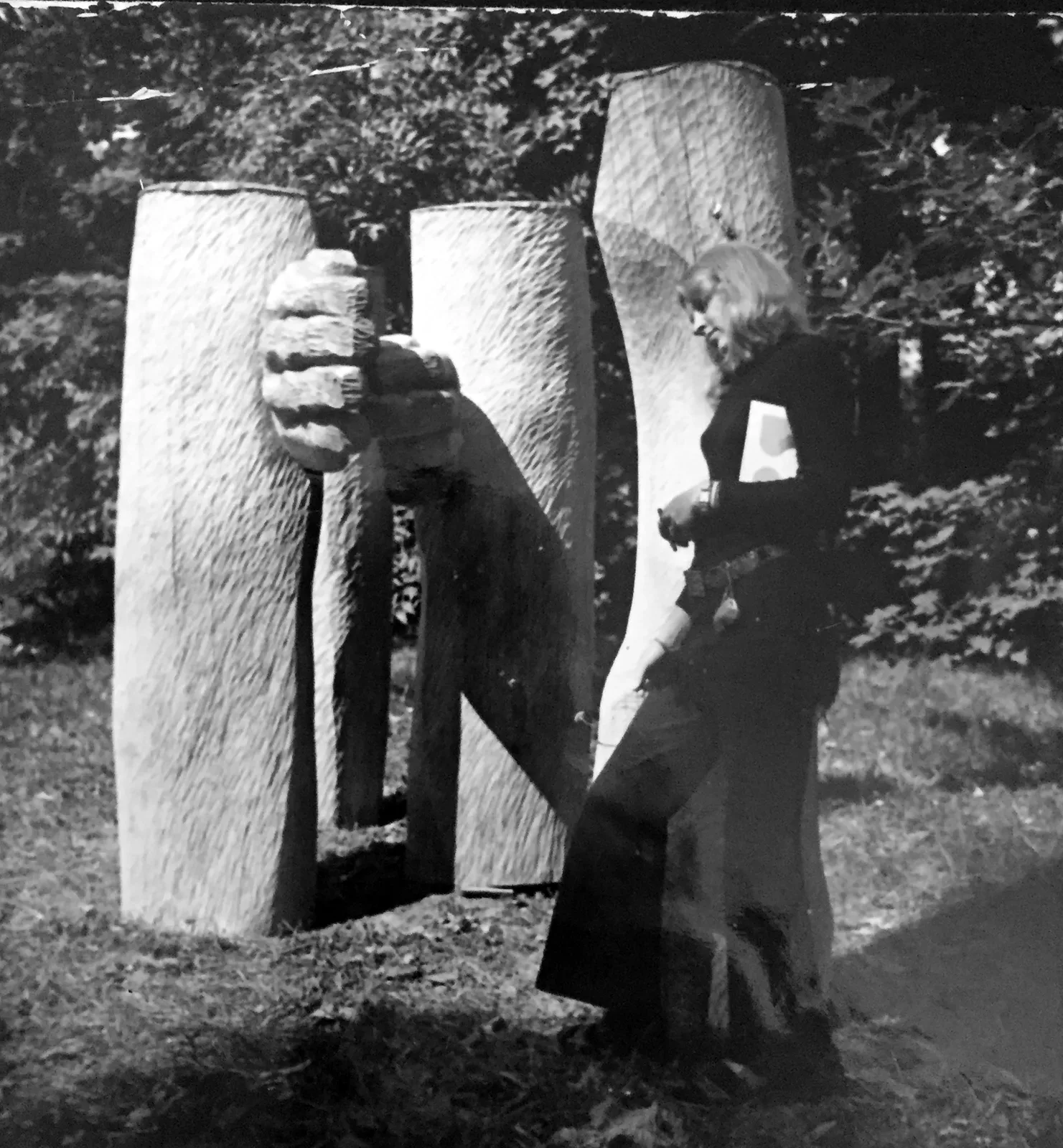
Five oak blocks taller than a person, worked in dense cuts like bark; and from one of them, at eye level, a great hand reaches forward, towards the viewer. It is one of Antonina’s first monumental works, carved in the open air in Slovakia in 1971, and one of her most direct images: the forest, and in the middle of the forest, the hand.
The room tells it together with the motif that lives in it: the hand, which returns in Antonina’s work for fifty years — from the gripped disc of the Discobolus to the joined hands of Recollection, to the open palm of the bronze for Emil B.
The work
The two period views: the group close together under the branches and, further back, all the blocks in the meadow at the edge of the wood.
The wood and the hand
Moravany nad Váhom · 1971The symposium is the wood symposium of Moravany nad Váhom, on the hills above Piešťany, and it has a rule: the works do not go back to the storerooms, they stay in the castle park where they were made. Its theoretical direction is in the hands of Tomáš Štraus; three Slovak sculptors work in the park, and Antonina is the only foreign guest of that edition.
She is twenty-nine and comes from the season of the great wooden pieces — Exile, Hiroshima, In captivity are of the same years —, but here the group grows leaner: five almost silent prisms, the surface in dense notches, and a single gesture. The hand does not stay inside the block: it comes out and carries forward, horizontal, at the height of the viewer. On the Slovak catalogue page the work carries its name in Slovak, Ruky.
In early September a critic from Bratislava arrives at Moravany while the sculptors are still at work, in the last stages, and writes of her:
Wysocka-Ionczaková prebúdza v reč mohutný archaický tvar, z ktorého sa vystierajú ruky človeka, človeka volajúceho i víťaziaceho. Wysocka-Jonczak wakes into speech a mighty archaic form, from which reach out the hands of man — man calling, and man prevailing.
The following year the Bratislava art review returns to the symposium with an appraisal, and the most unanimous judgement — praised by the defenders of either aesthetic — goes to her. The critic counts five blocks of wood exceeding the dimensions of the human figure and observes that “the young, slight sculptor” has worked them with a sensitivity recalling the most difficult working of hard stone; that the mark changes rhythm and accent from every point of view, so that the simple basic form grows more interesting with every new look. Then he comes to the gesture:
Motív rúk, vystupujúci z veľkých hranolov pozadia a vystretý horizontálne smerom k pozorovateľovi, nadobúda zmysel mnohoznačného lyrického symbolu. […] Dielo poľskej sochárky patrí pritom naozaj medzi doterajšie vrcholné diela moravianskej zbierky plastík. The motif of the hands, emerging from the great prisms of the background and stretched horizontally towards the observer, takes on the sense of a lyrical symbol of many meanings. […] The work of the Polish sculptor truly ranks among the highest works of the Moravany collection.
This is what the monumental does: a single form the wood can absorb, and a gesture that stays open to whoever looks at it. The hand never leaves her again.
- Andrej Goliaš slovakia
- Alexander Ilečko slovakia
- Juraj Meliš slovakia
- Antonina Wysocka-Jonczak poland
- Tomáš Štraus theoretical direction
Four sculptors in the castle park of Moravany, given over to wood; other foreign guests had been invited but could not confirm in time, and Antonina remained the only one come from abroad.
Orońsko · 1985
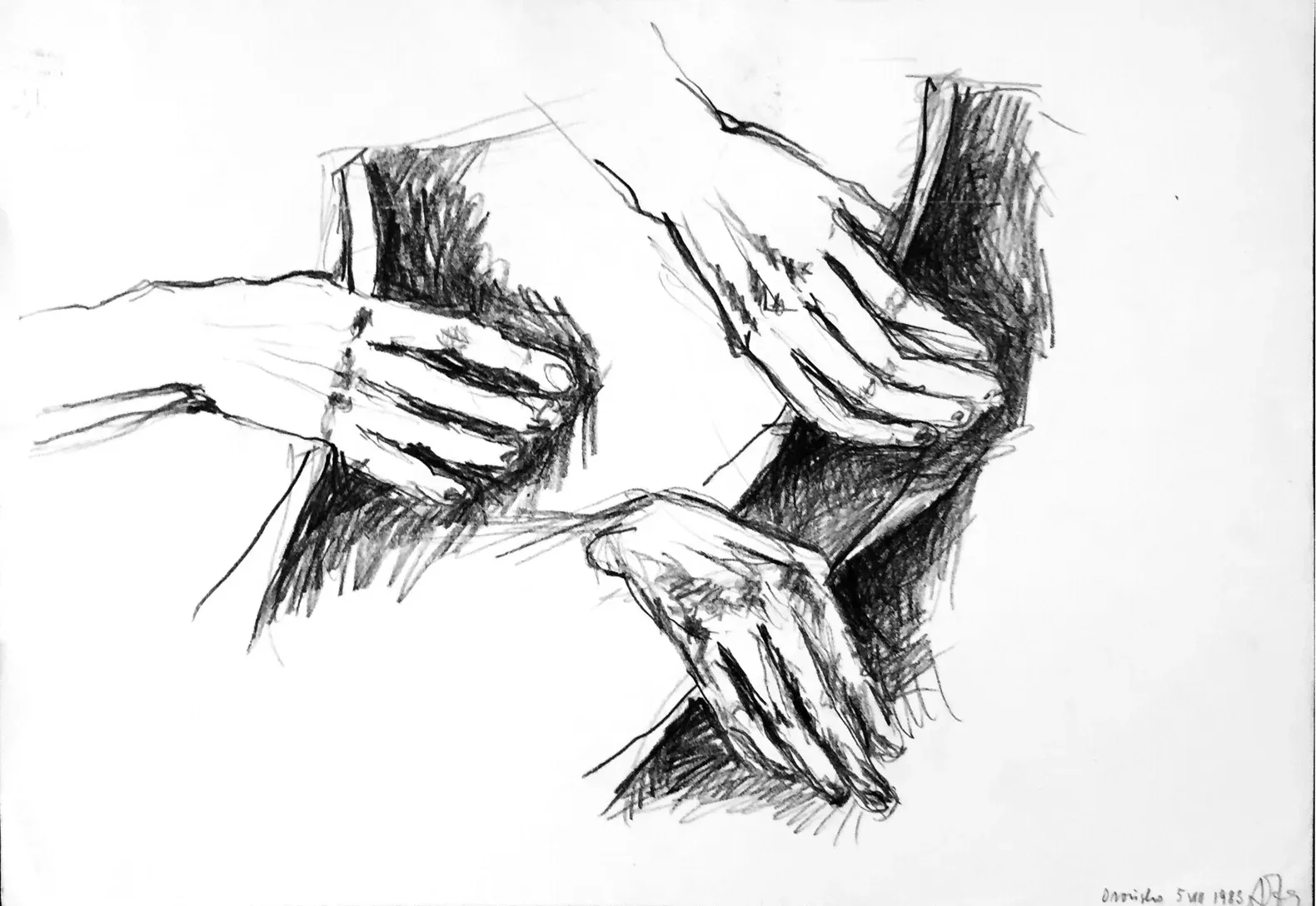
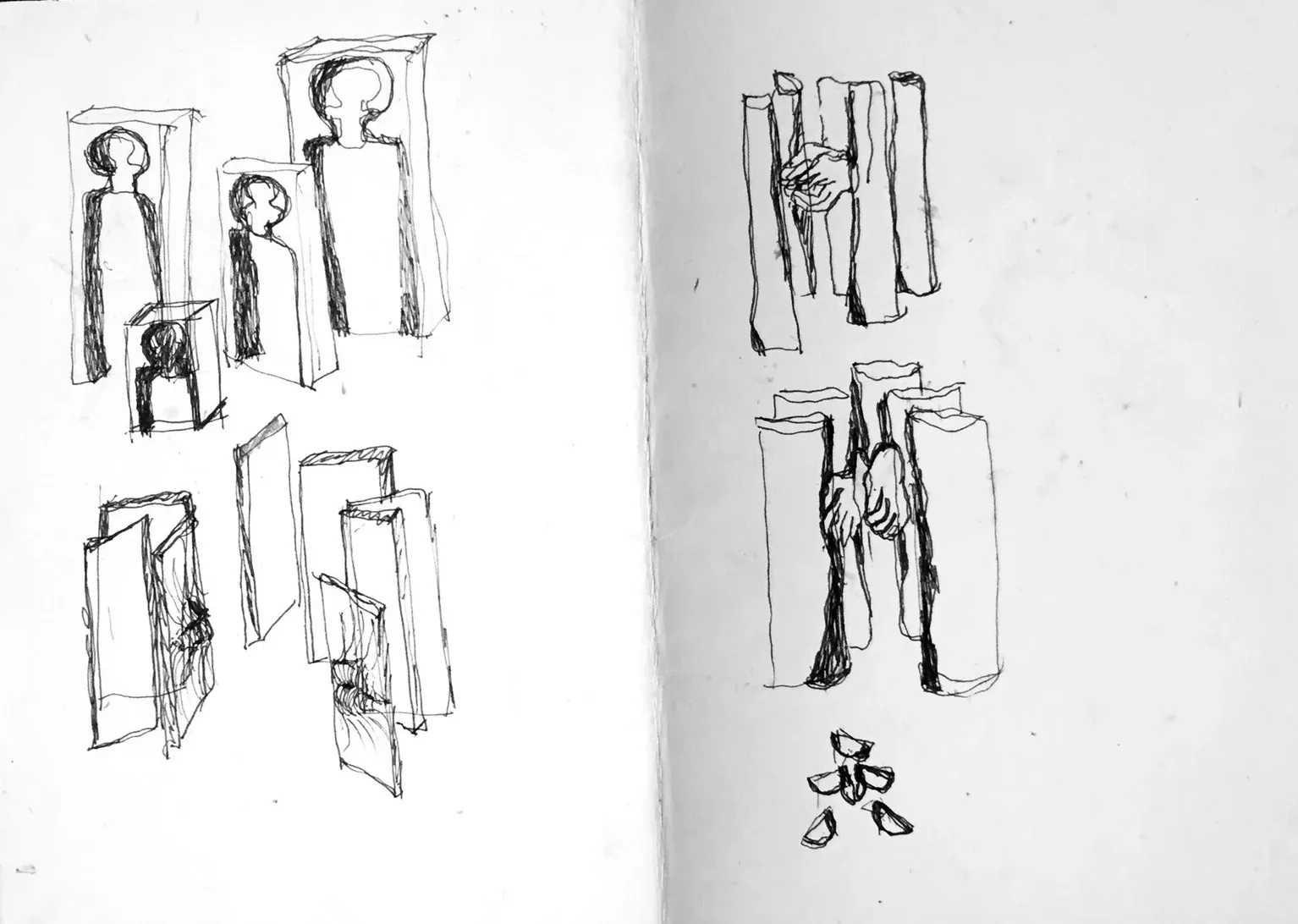
And the composition returns in a notebook, on a page that carries no date: four tall slabs of different heights, set together as here, and in the middle a hand wedged between two of them. Below, the same idea with two hands. It is the Moravany layout drawn in miniature.
When that page was filled, no one knows: the notebook is undated, and its other pages work motifs the artist keeps open from 1971 to 2000. It may be the thought that precedes the oak, or the hand returning to it, as in 1985.
The hands in the work
Five works of the catalogue in which the hand returns as protagonist. Each label opens the entry.
-
 Open the catalogue entry →
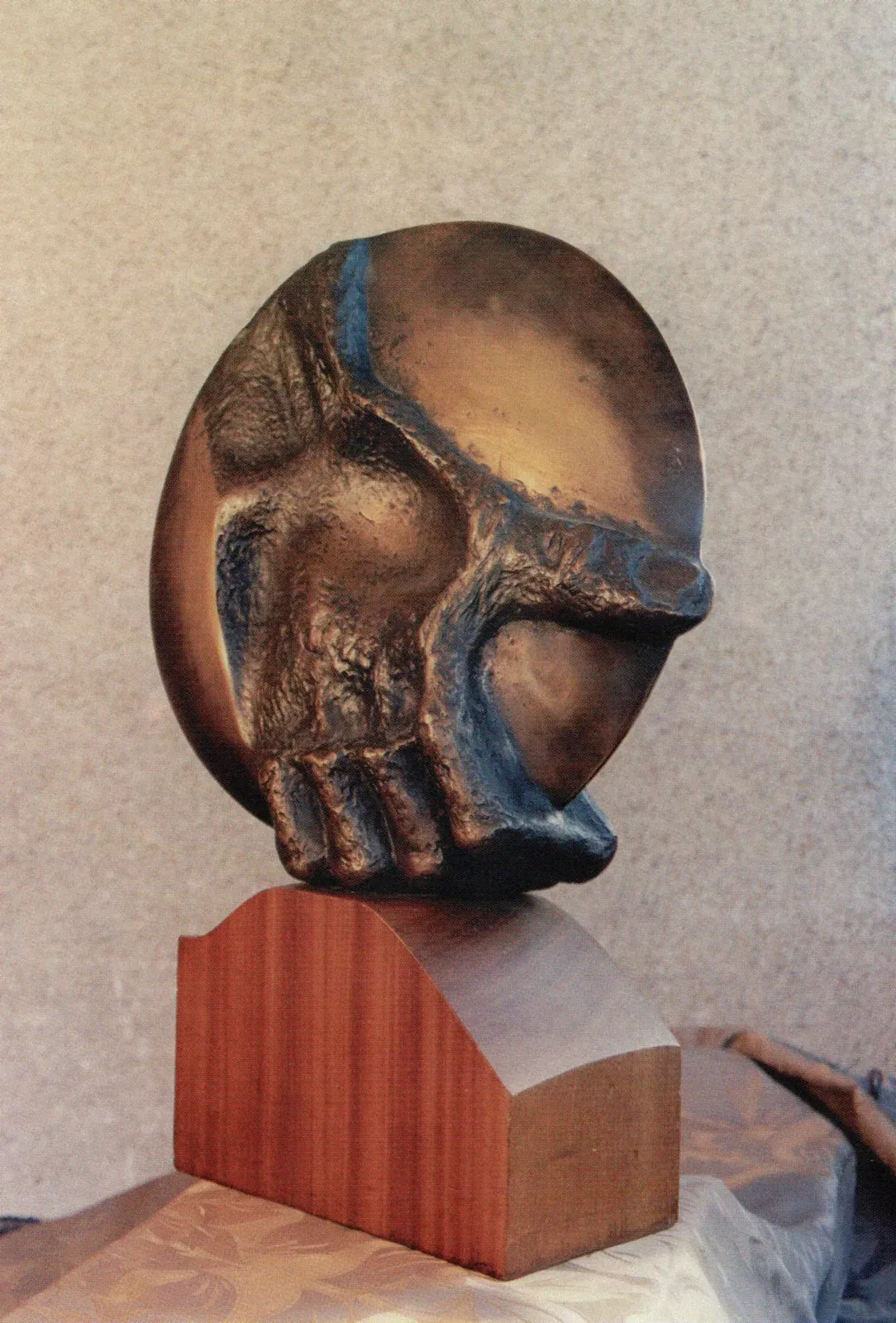
 AW.S.0118 Dyskobol
Discobolus1976
The hand that grips the disc.
-
 Open the catalogue entry →
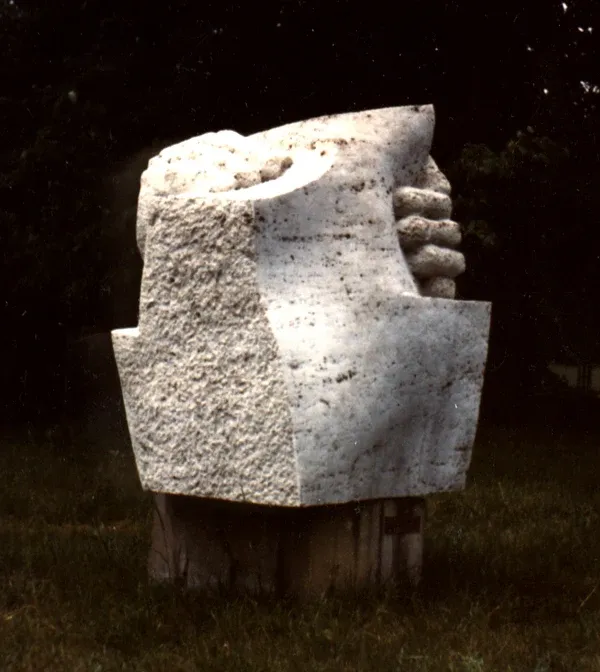
 AW.S.0043 Zmaganie
Struggle1982
The travertine like a clenched hand.
-
 Open the catalogue entry →
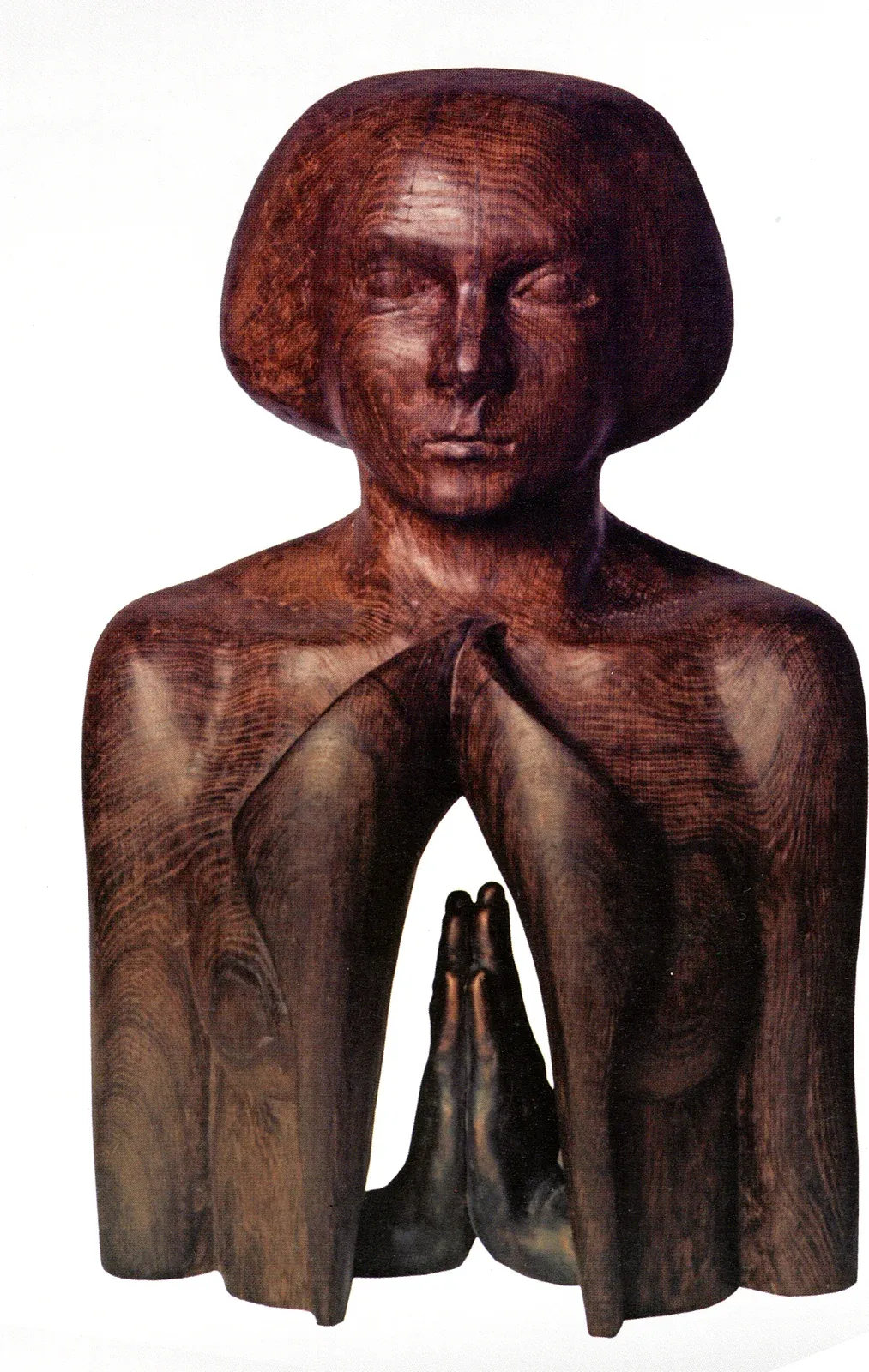
 AW.S.0021 Skupienie
Recollection1986–87
The joined hands in the opening of the chest.
-
 Open the catalogue entry →
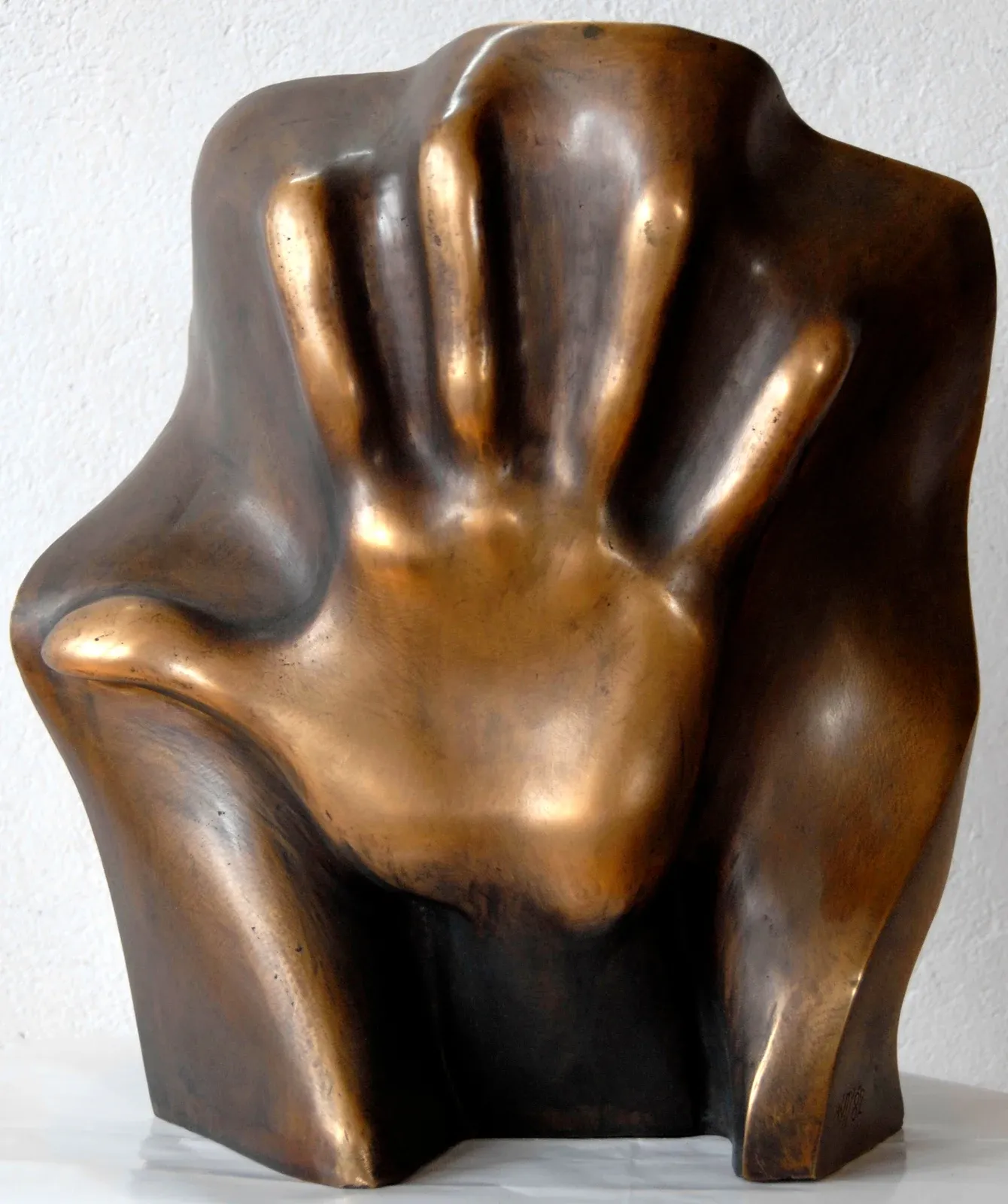
 AW.S.0018 Pamięci Emila „B”
In memory of Emil B.1982
The open palm of memory.
-
 Open the catalogue entry →
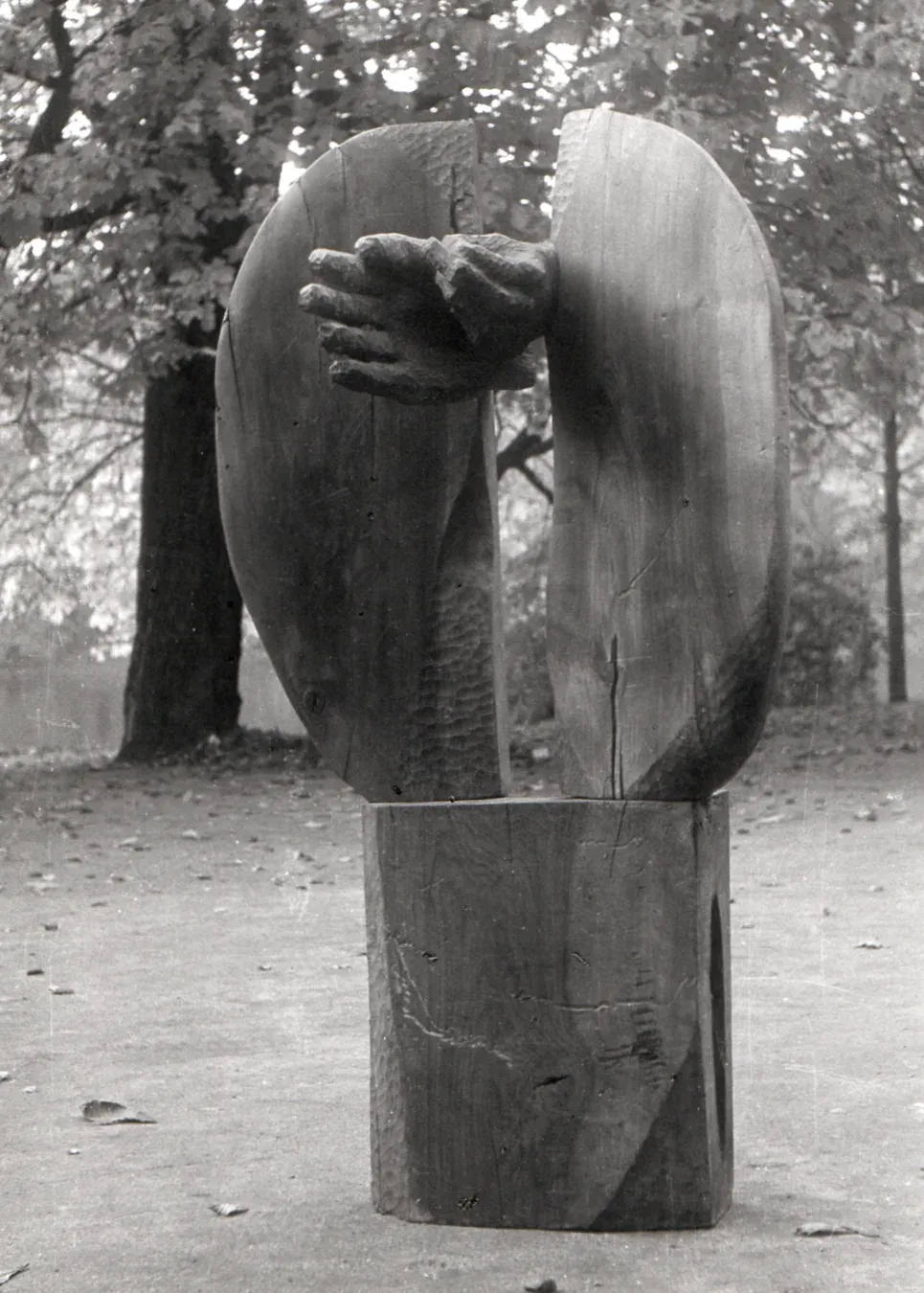
 AW.S.0127 W uwięzi
In captivity1971
The hand closed between the valves.