The drop
Tears and drops · one form in four materials
A point at the top, a full body below. It is a form that recurs in Antonina’s work, taken up in different materials: she hollows it in wood, cuts it into granite, carves it in marble, models it in clay and glazes it red.
The titles call it by two words, and they are not synonyms: «łza» is the tear, «kropla» the drop. The first comes from an eye, the second from a sky or a spring — and the works divide between the two words while the form stays the same.
The same form, three materials
The three works that carry the drop in their title and belong to no other series: the wood of 1993, the marble of 1996, the undated ceramic.
-
 Enter the room →
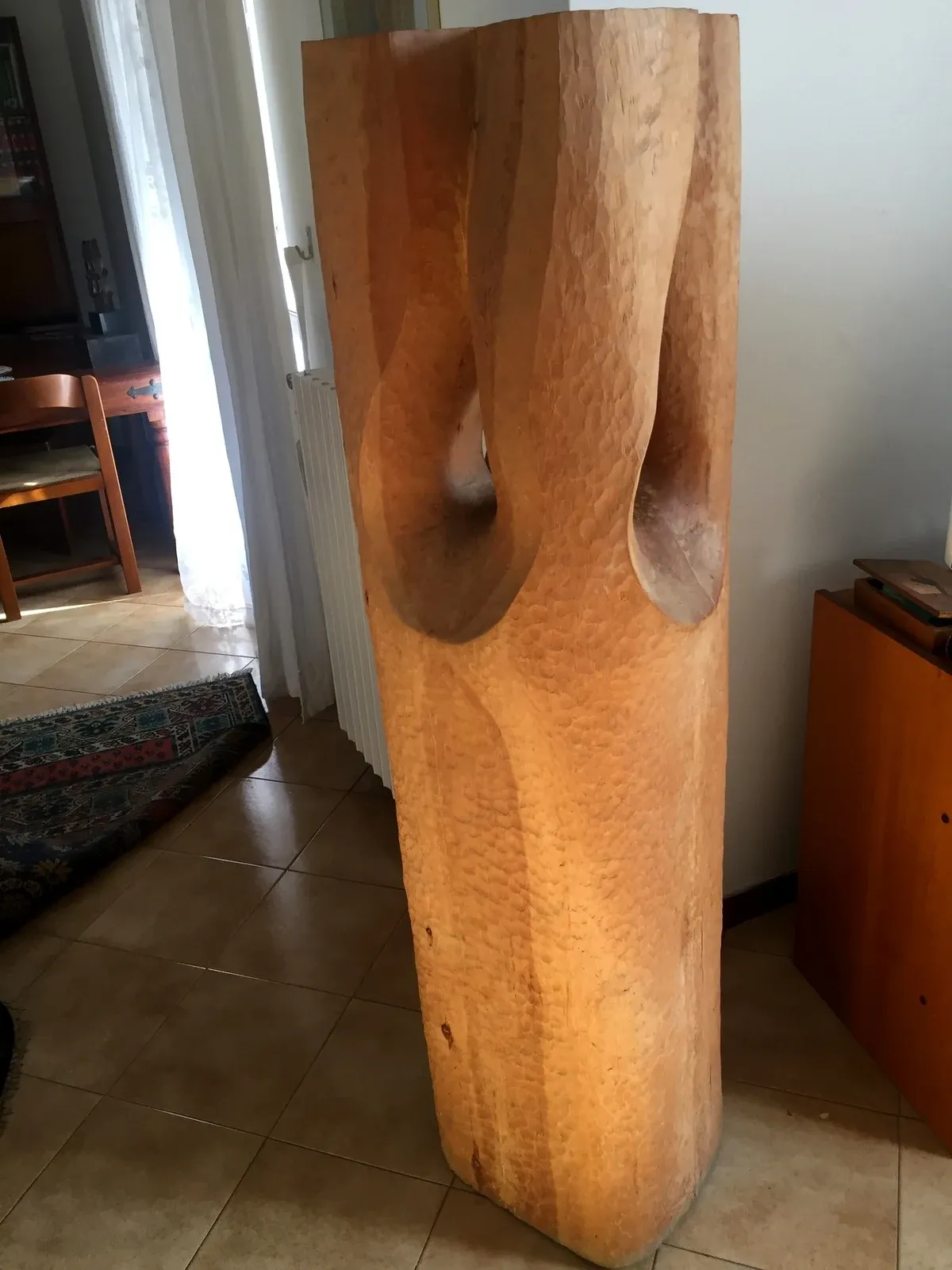
 AW.S.0082 Łza poznania
Tear of knowledge1993 · wood · 154 × 40 × 36 cm
private collectionThe drop in the negative: two cavities cut deep into the trunk, divided by a thin wall. Awarded at Belluno in 1993.
-
 Open the catalogue entry →
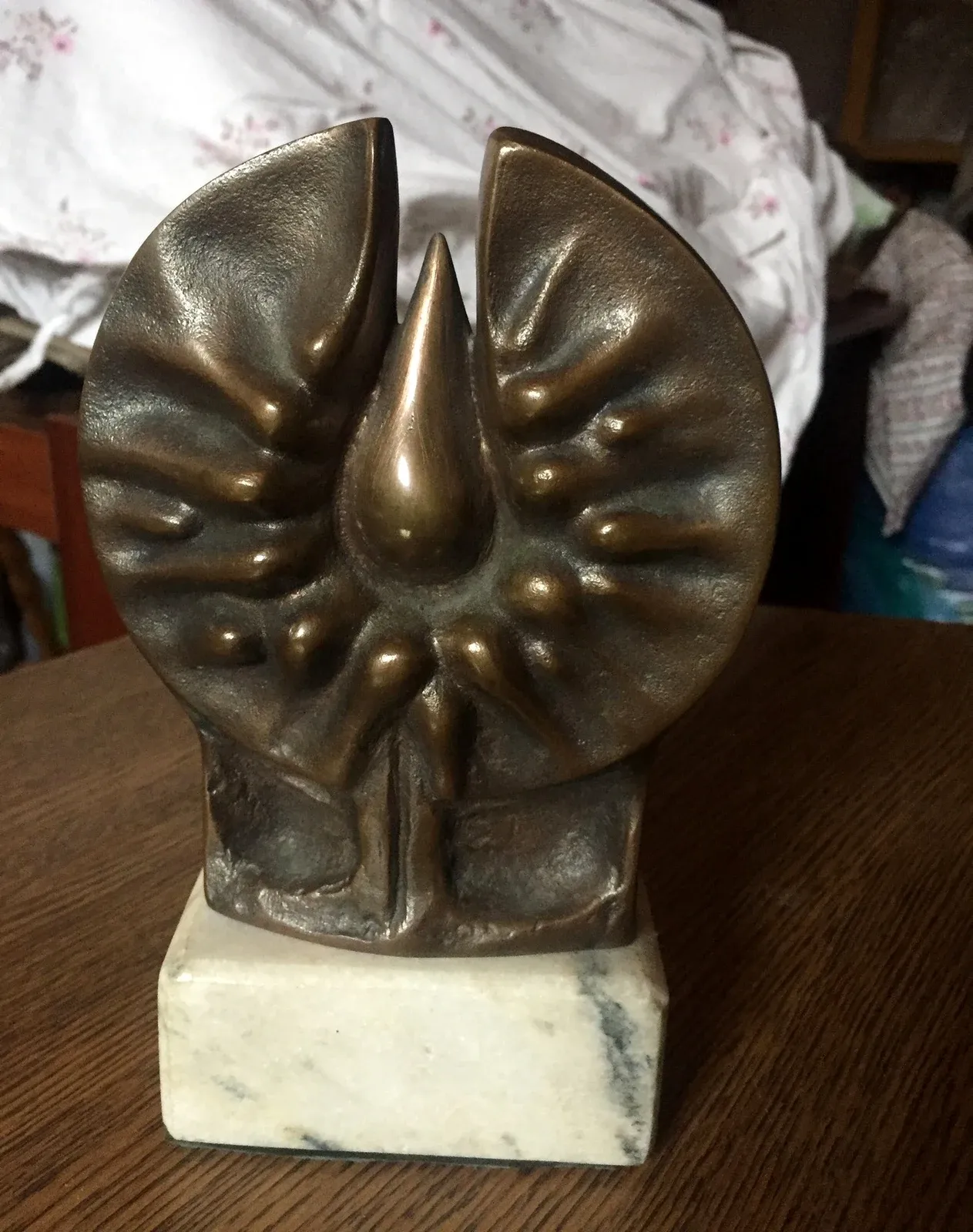
 AW.S.0065 Z cyklu „Sacrum”
From the Sacrum cycle1993 · bronze, marble
private collectionThe drop in relief, at the centre of a disc that opens like a fan and surrounds it with rays. The same composition she will cut into granite two years later.
-
 Open the catalogue entry →
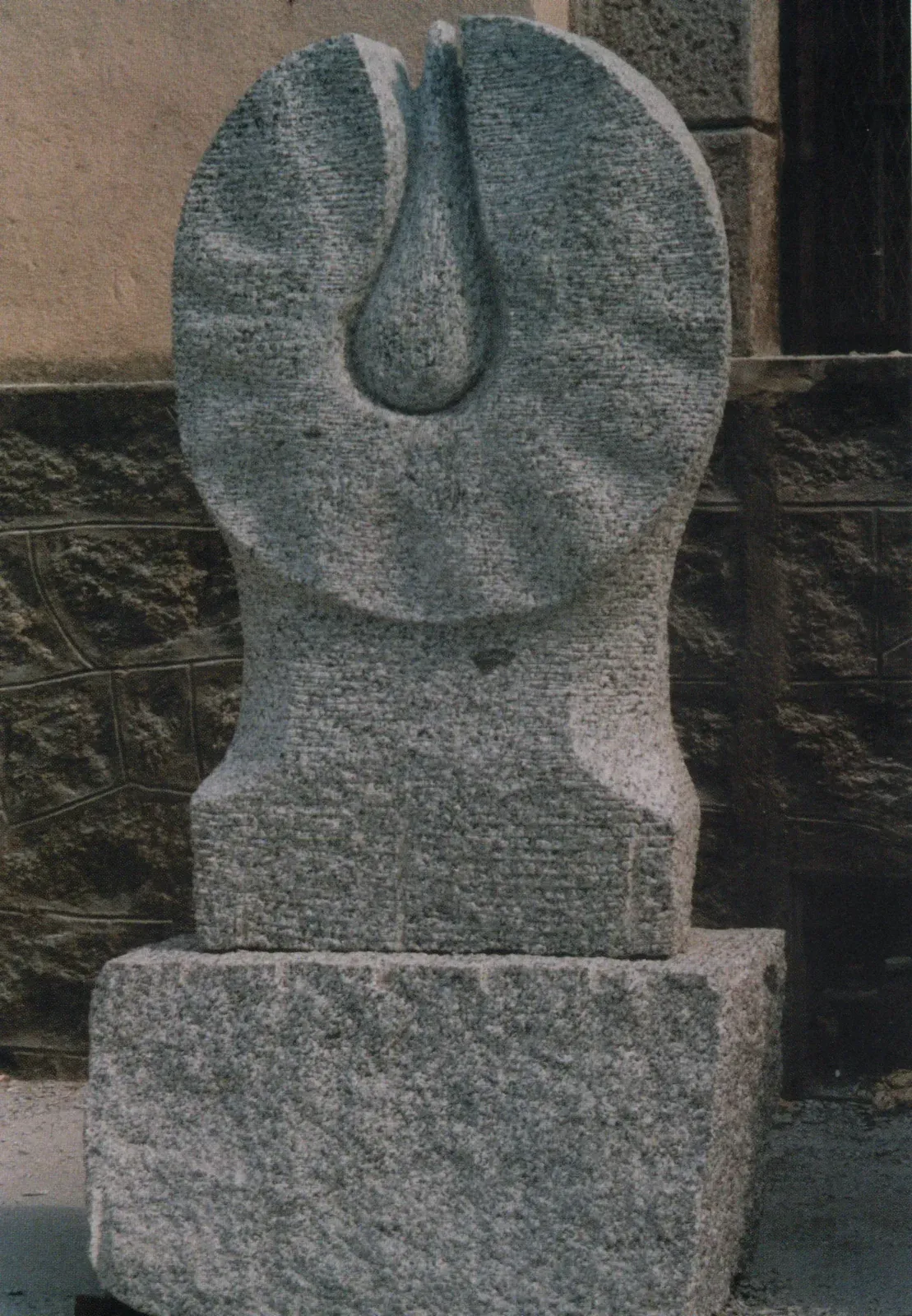
 AW.S.0042 Łza szczęścia
Tear of happiness1995 · granite · h 260 cm
Buddusò (Sardinia)The same composition in granite, two metres sixty tall, carved at the Buddusò symposium. In the catalogue it stands among the Park stones: it has stayed where it was made.
-
 Open the catalogue entry →
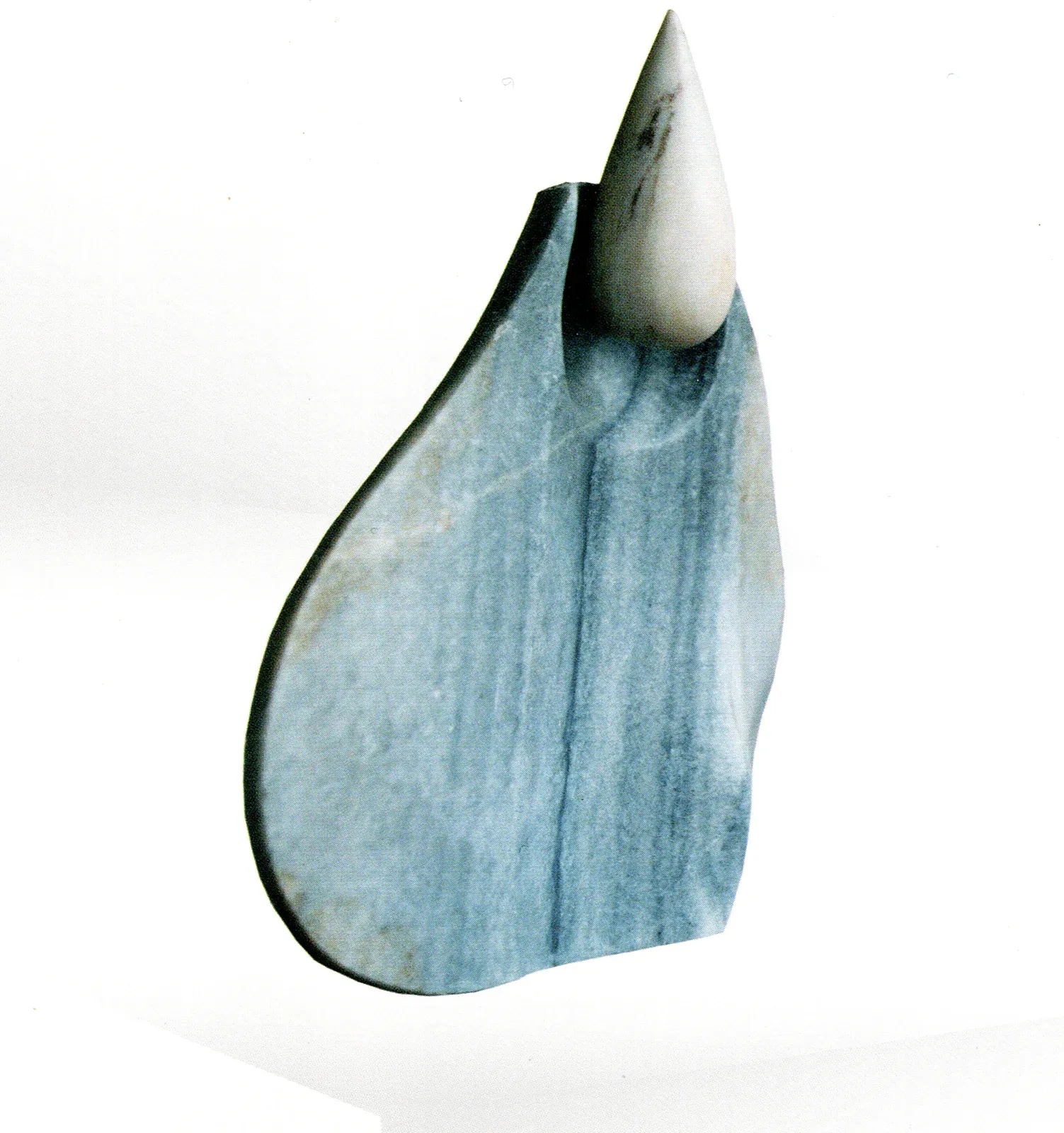
 AW.S.0023 Kropla życia
Drop of life1996 · marble · two elements
Muzeum Regionalne, SiedlceTwo elements: a drop of bluish marble lying on its side, and standing on its tip a second drop, in white.
-
 Open the catalogue entry →
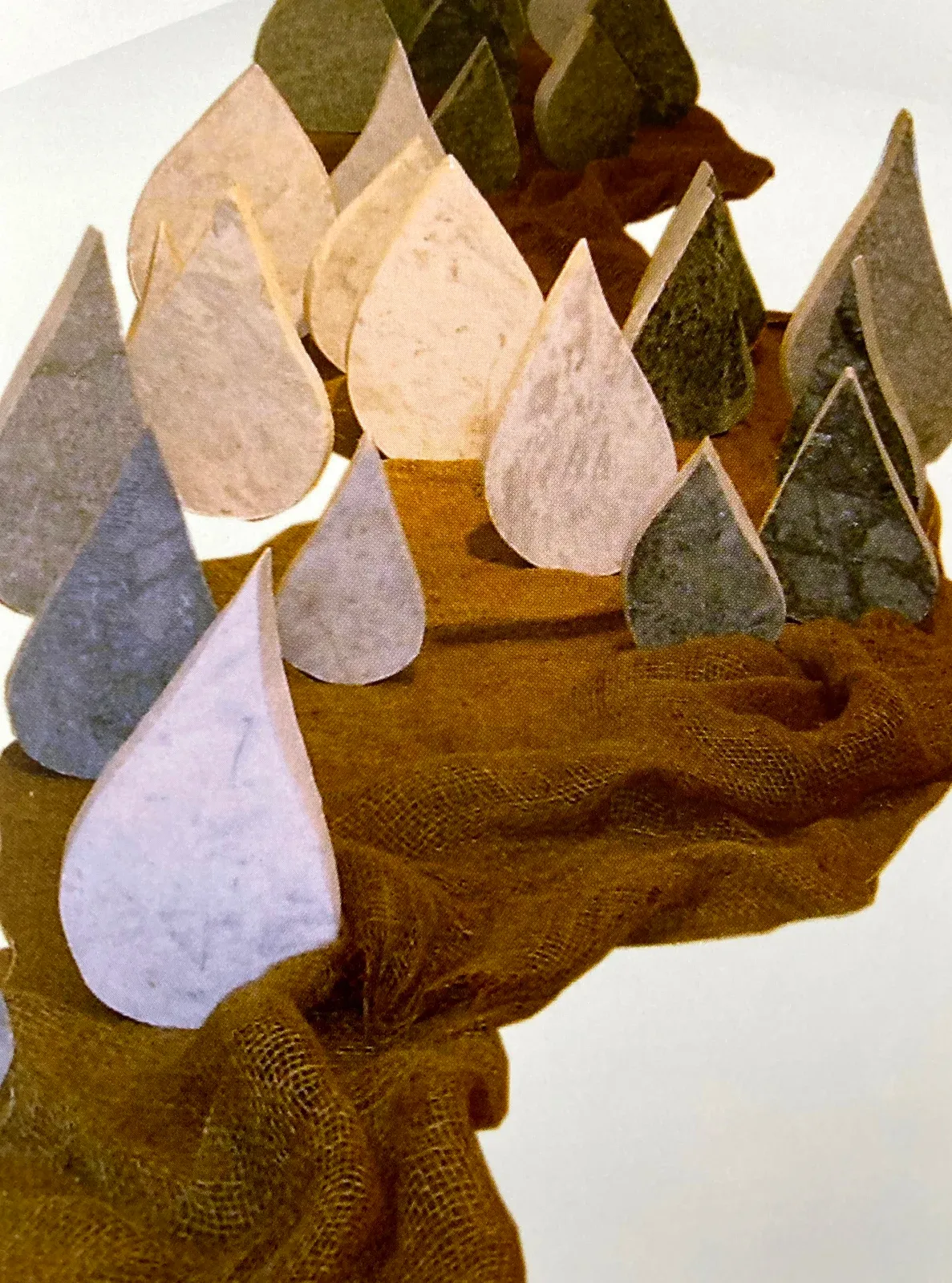
 AW.S.0027 Droga
The road1996 · marble · h 20 cm, twenty-eight elements
private collectionTwenty-eight marble drops, each of a different stone — white, grey, green, pinkish — laid on the ground: the form becomes a number, and the number a path.
-
 Open the catalogue entry →
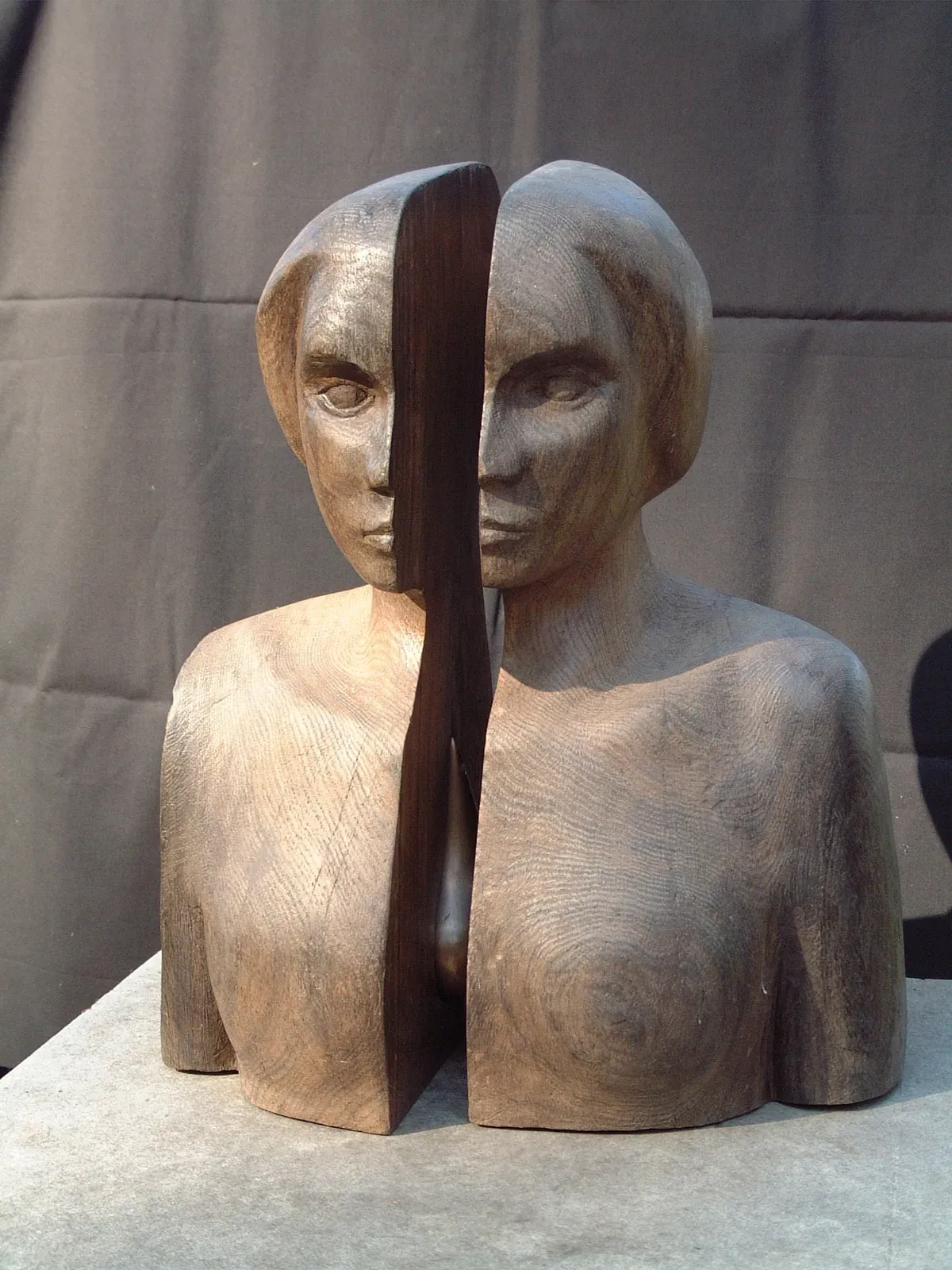
 AW.S.0002 Nadzieja
Hope1999 · black oak · h 57 cm, three elements
Muzeum Regionalne, SiedlceHere the drop is not the work: it is what the work holds. It comes down in the gap between the two halves of the bust, pointed above and full at the height of the chest. In the catalogue it stands among the Subiektywny.
-
 Open the catalogue entry →
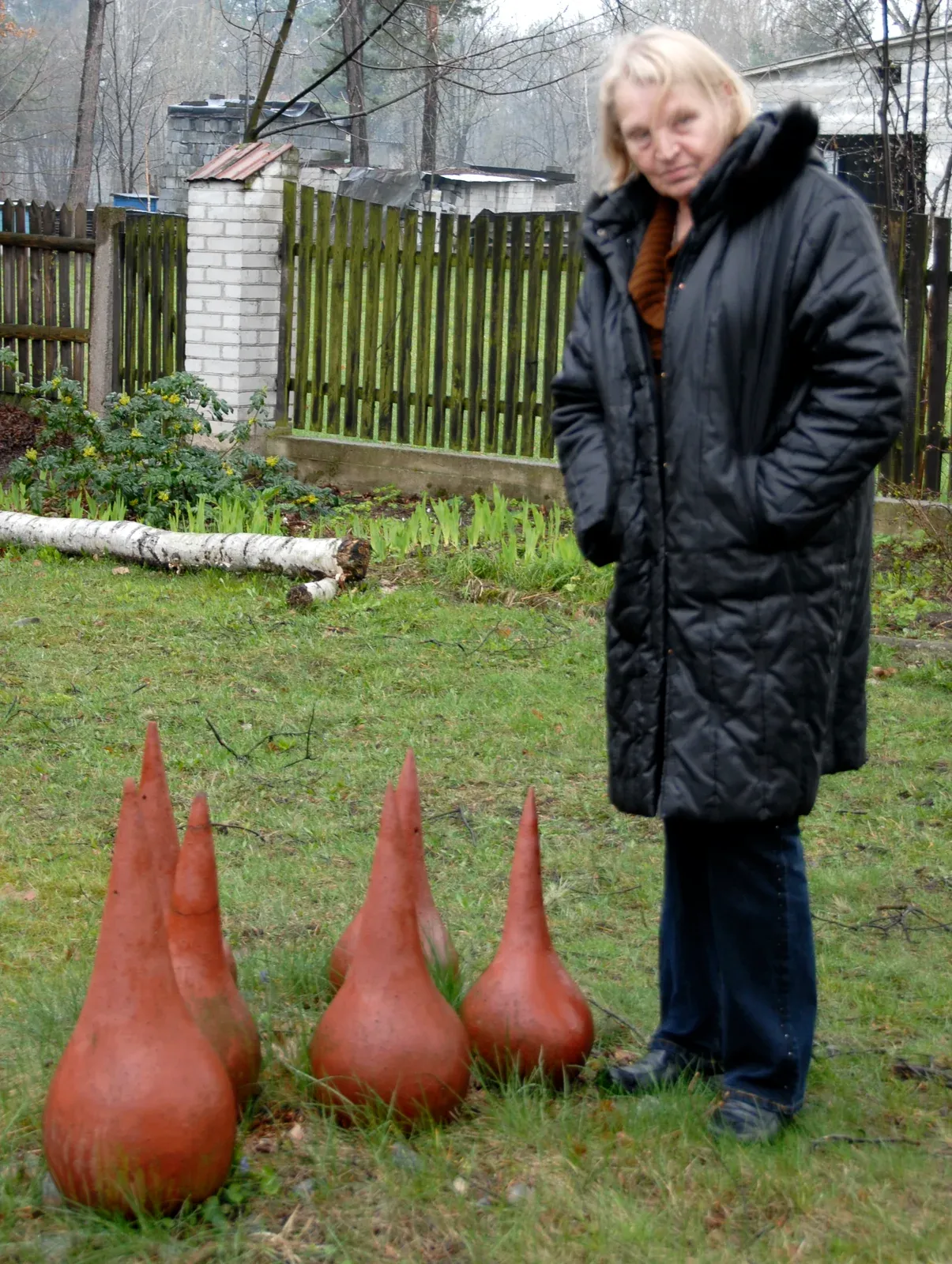
 AW.S.0008 Łzy
Tearsceramic · seven elements
Seven elements of red-glazed ceramic set on the grass of a garden: the one time the drop stands outdoors, in a group, and at the scale of a person.
What the form does
Seven times, and never the same craftThe drop changes craft with the material. In wood it is a void: two cavities cut deep, and the form is the air that is left. In bronze and in granite it is a relief at the centre of a rayed disc — the same composition, eight years and two materials apart. In marble and in ceramic it stands alone, with nothing around it, and then it multiplies: two elements, twenty-eight, seven.
And once only it is not the work but what the work holds: in «Nadzieja», inside the gap between the two halves of the bust. Two of the seven do in fact stand in other series — the Buddusò stone among the Park stones, the bust among the Subiektywny — because there the drop is an element and not the subject. They are shown together here all the same, which is the only way to notice that they are the same thing.
The form comes back on paper too, in the design sheets: steles with the drop cut into them, slabs with two drops in relief, blocks hollowed around a suspended core. It is the vocabulary of a decade.