Subiektywny
The expressive busts · 1980–1999
A frontal bust, a still face without individuality — and on that face, each time, something happens: a slab drops over the eyes, the matter tears open on the chest, two bronze hands join in an opening. They are inner states brought to the surface and given form: subjectivity, laceration, recollection.
The series opens in 1980 with the two «Subiektywny» — the Subjective — and crosses almost twenty years. The faces stay impersonal on purpose: on stage there is no portrait but a state, and anyone must be able to recognise themselves in it. The wood is polished until it mirrors the light; the bronze carries its patina.
The busts
Nine busts in the order of the years, all in colour: the patina of the bronzes and the mirror-polished wood are as much part of the work as the form.
-
 Open the catalogue entry →
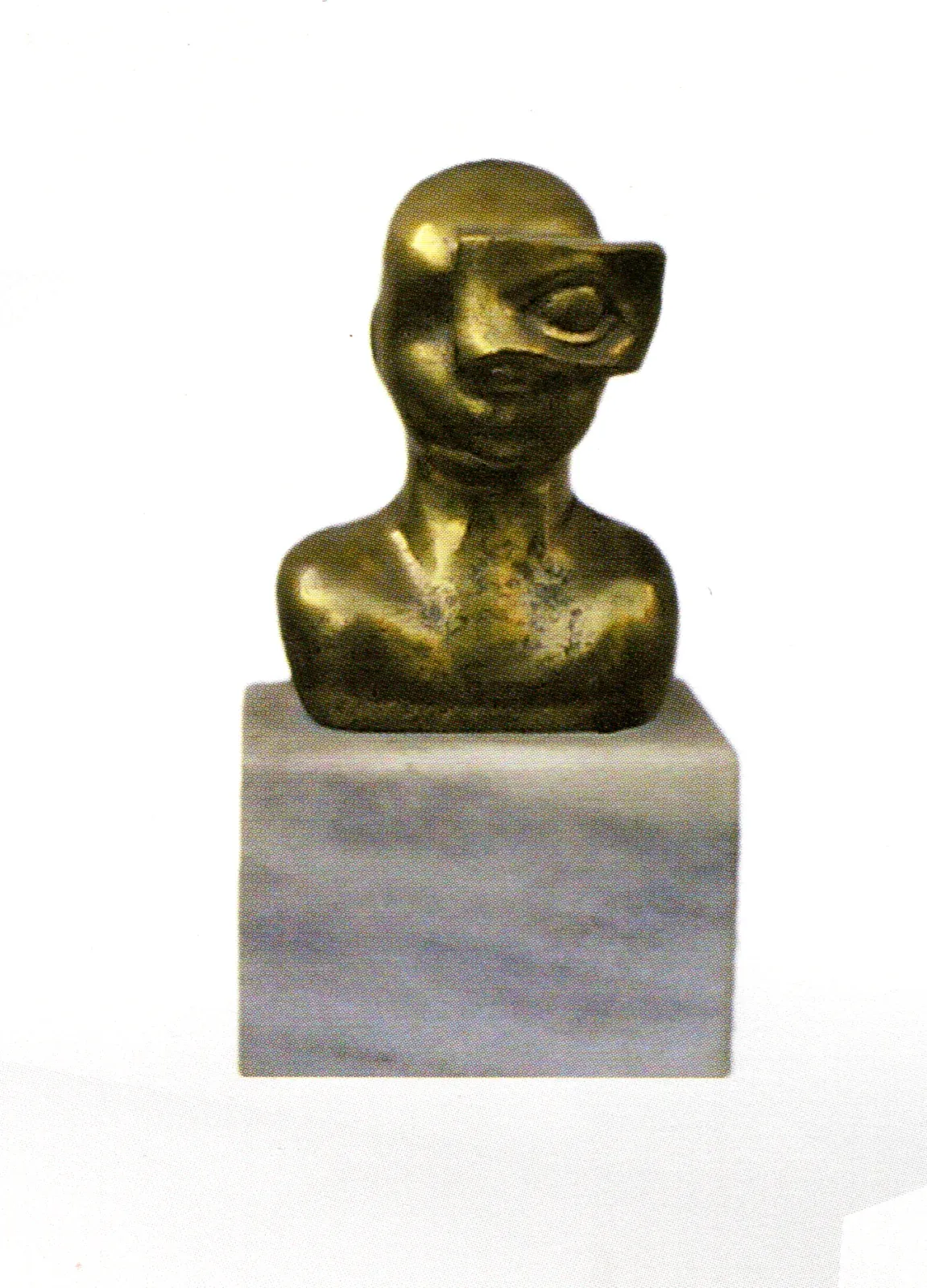
 AW.S.0007 Subiektywny
Subjective1980 · bronze · 10 × 9 × 16 cm with base
private collectionThe small version, in bronze: the Subjective to hold in the hand.
-
 Open the catalogue entry →
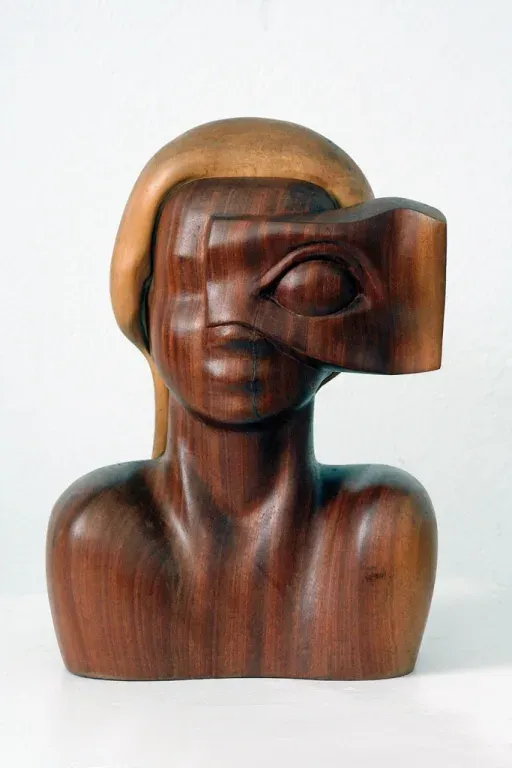
 AW.S.0126 Subiektywny II
Subjective II1980 · wood (mahogany and maple) · h 40 cm
Centrum Rzeźby Polskiej, OrońskoThe same invention as the bronze above, remade large: the slab over the eyes returns unchanged, in mahogany and maple.
-
 Open the catalogue entry →
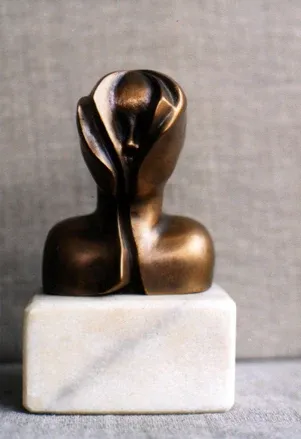
 AW.S.0009 Z cyklu Subiektywny
From the cycle «Subiektywny»1980 · bronze · 10 × 9 × 16 cm with base
private collection -
 Open the catalogue entry →
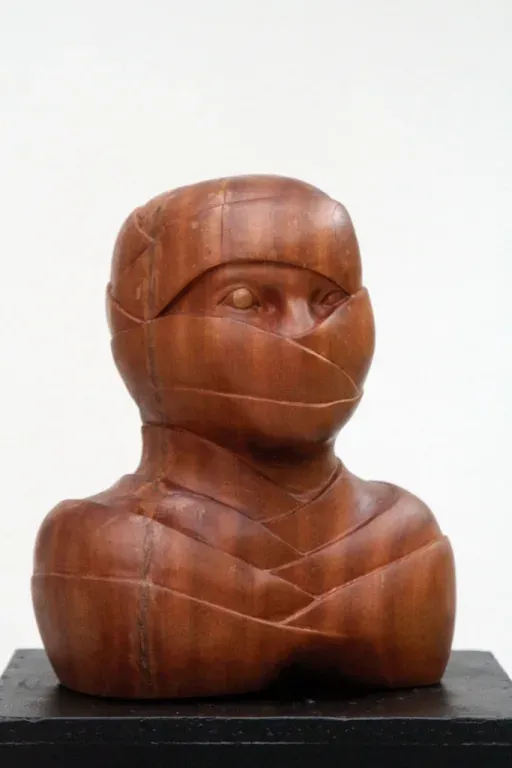
 AW.S.0059 Subiektywny I
Subjective I1980 · wood
Centrum Rzeźby Polskiej, OrońskoThe other Orońsko wood: here the face is not barred but bandaged, and the bandages leave a slit open at eye level.
-
 Open the catalogue entry →
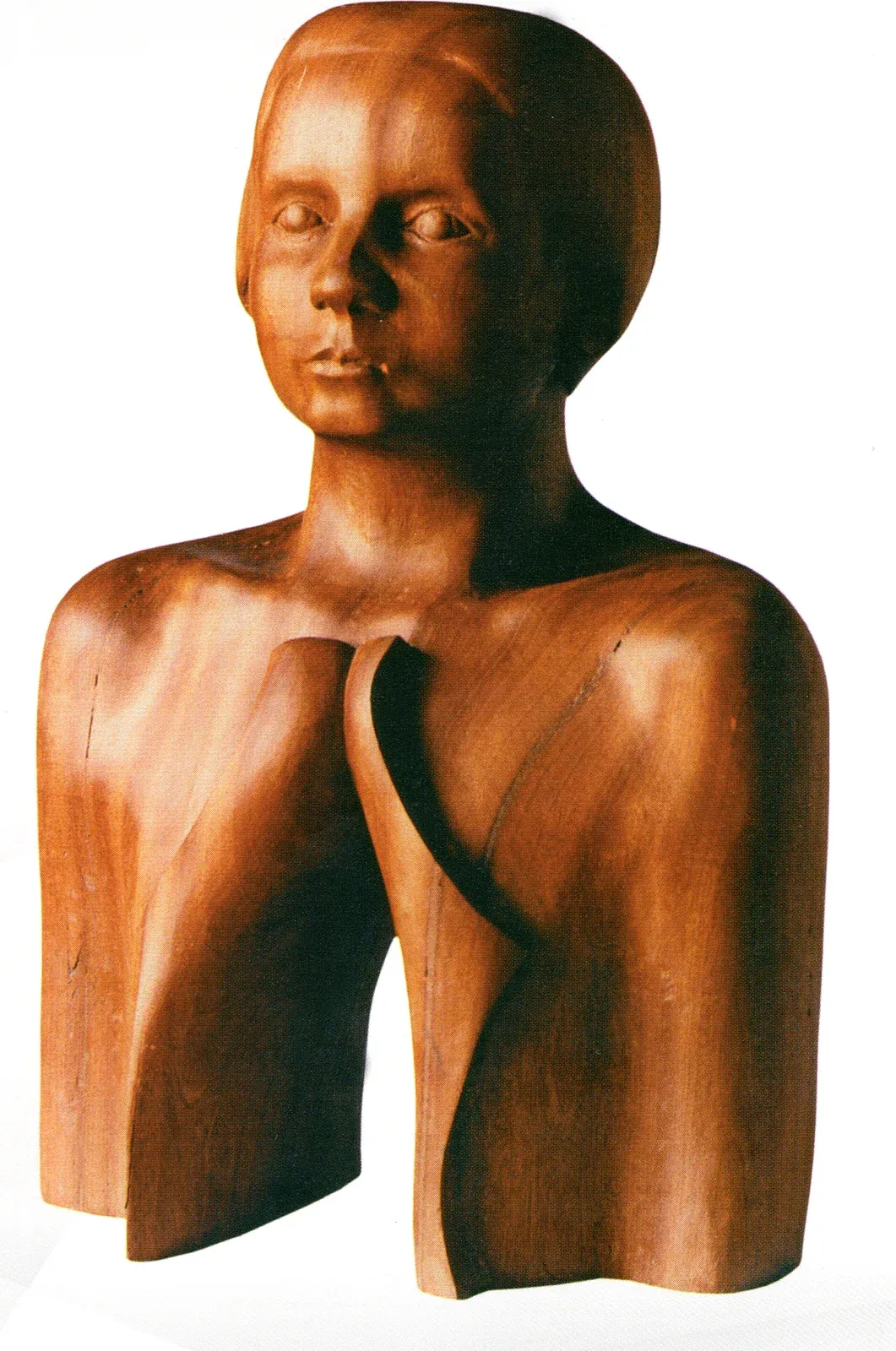
 AW.S.0022 Rozdarty
Torn1981–84 · mahogany · h 50 cm
Muzeum Regionalne, Siedlce -
 Open the catalogue entry →
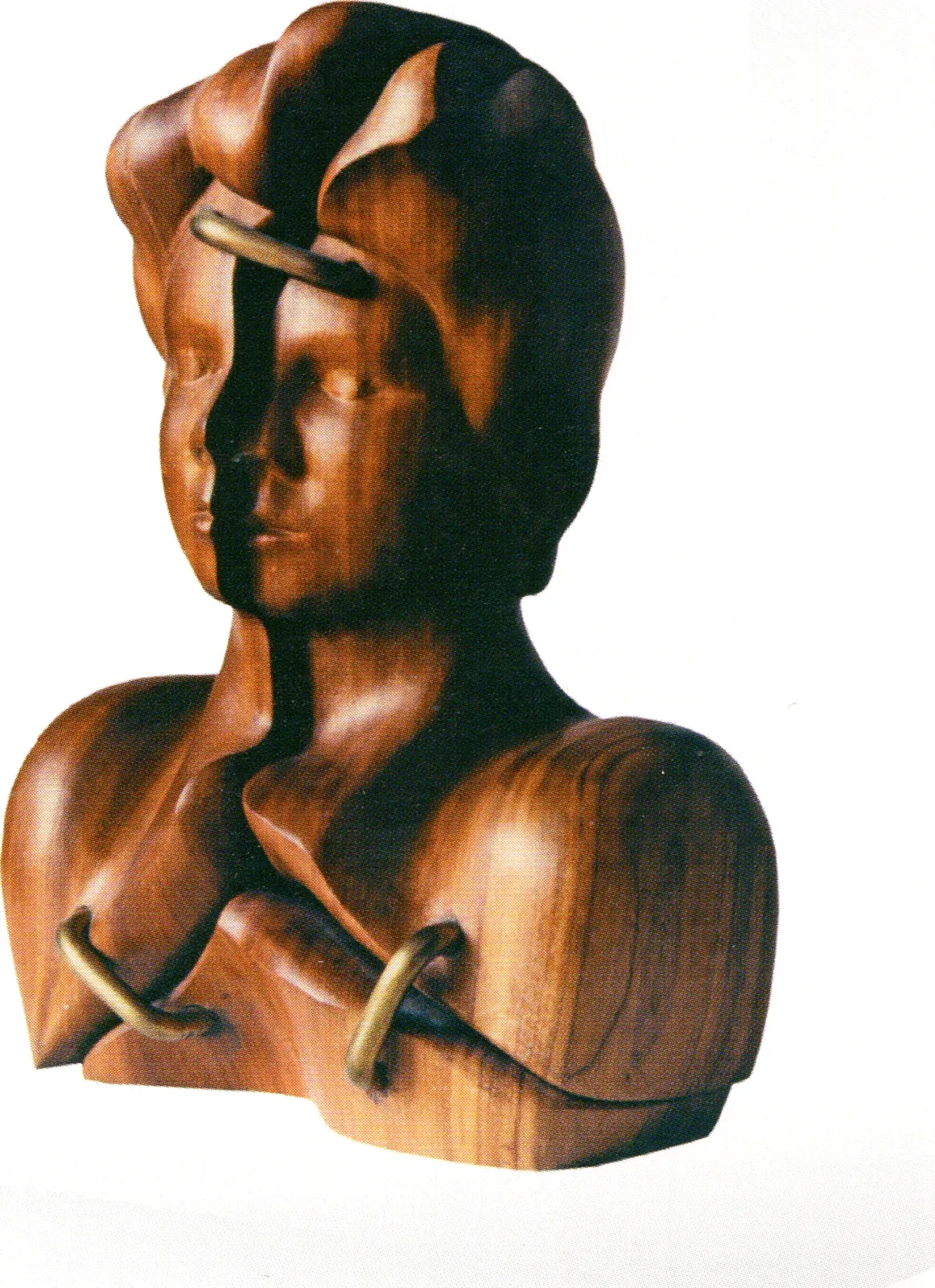
 AW.S.0060 Scalona
Re-joined1981 · mahogany, brass · h 40 cm
Centrum Rzeźby Polskiej, OrońskoThe pendant of the Torn: here the split passes through the face, and brass sews it back.
-
 Enter the room →
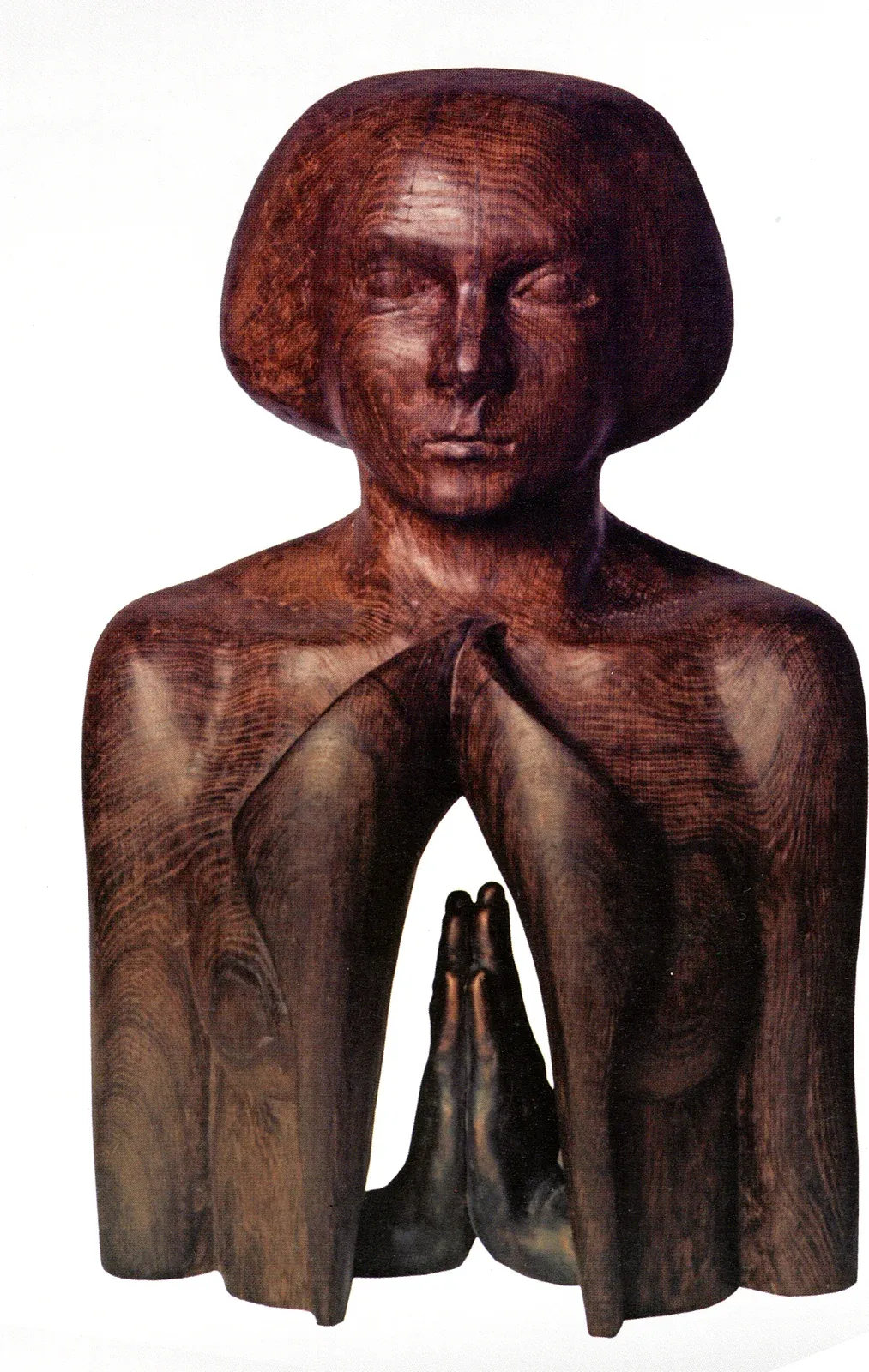
 AW.S.0021 Skupienie
Recollection1986–87 · black oak, bronze · h 57 cm, two elements
Muzeum Regionalne, SiedlceIn the opening of the chest, two joined bronze hands.
-
 Open the catalogue entry →
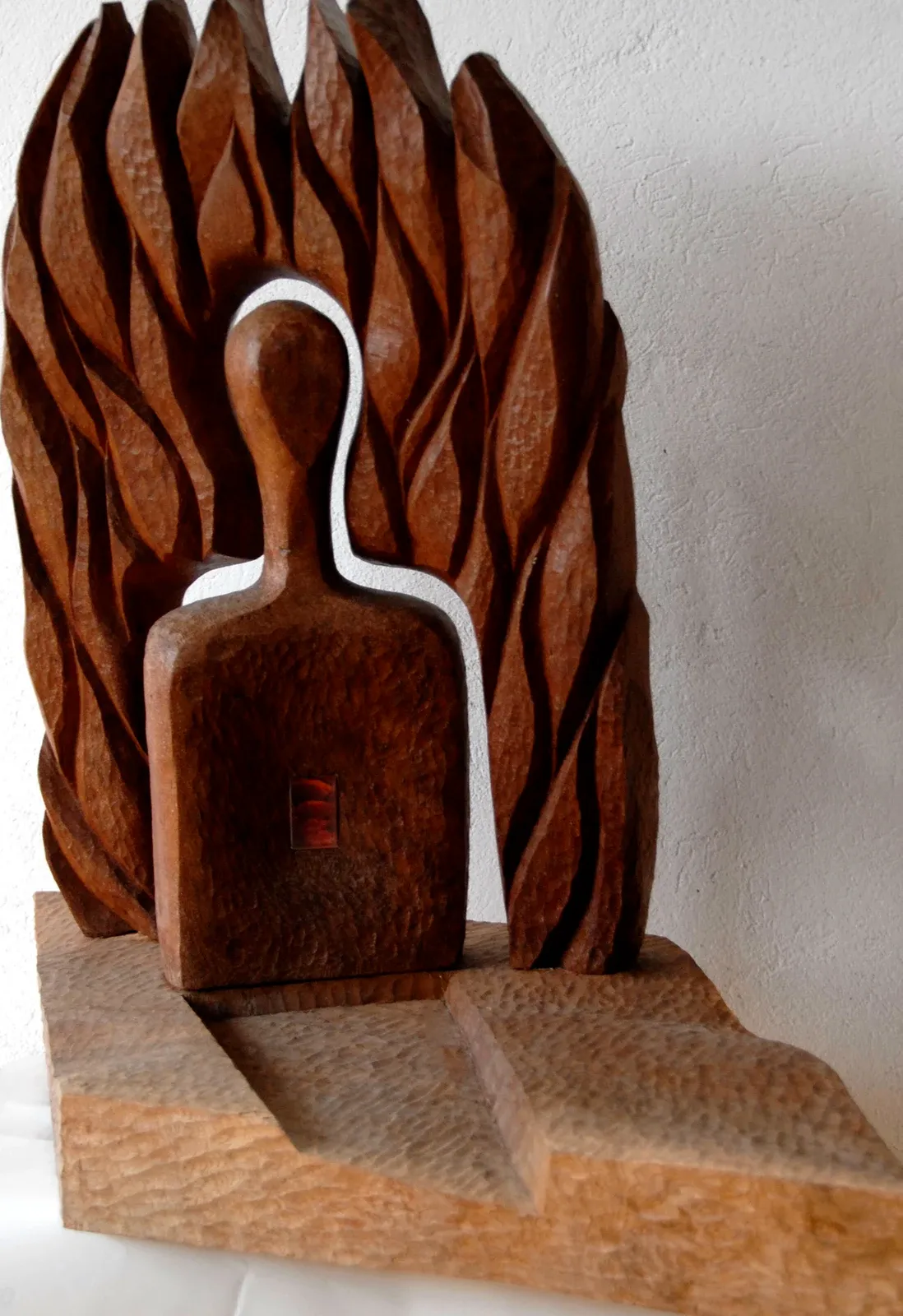
 AW.S.0013 Zranione Ego
Wounded ego1997 · mahogany · three elements
Muzeum Regionalne, Siedlce -
 Open the catalogue entry →
 AW.S.0002 Nadzieja
Hope1999 · black oak · h 57 cm, three elements
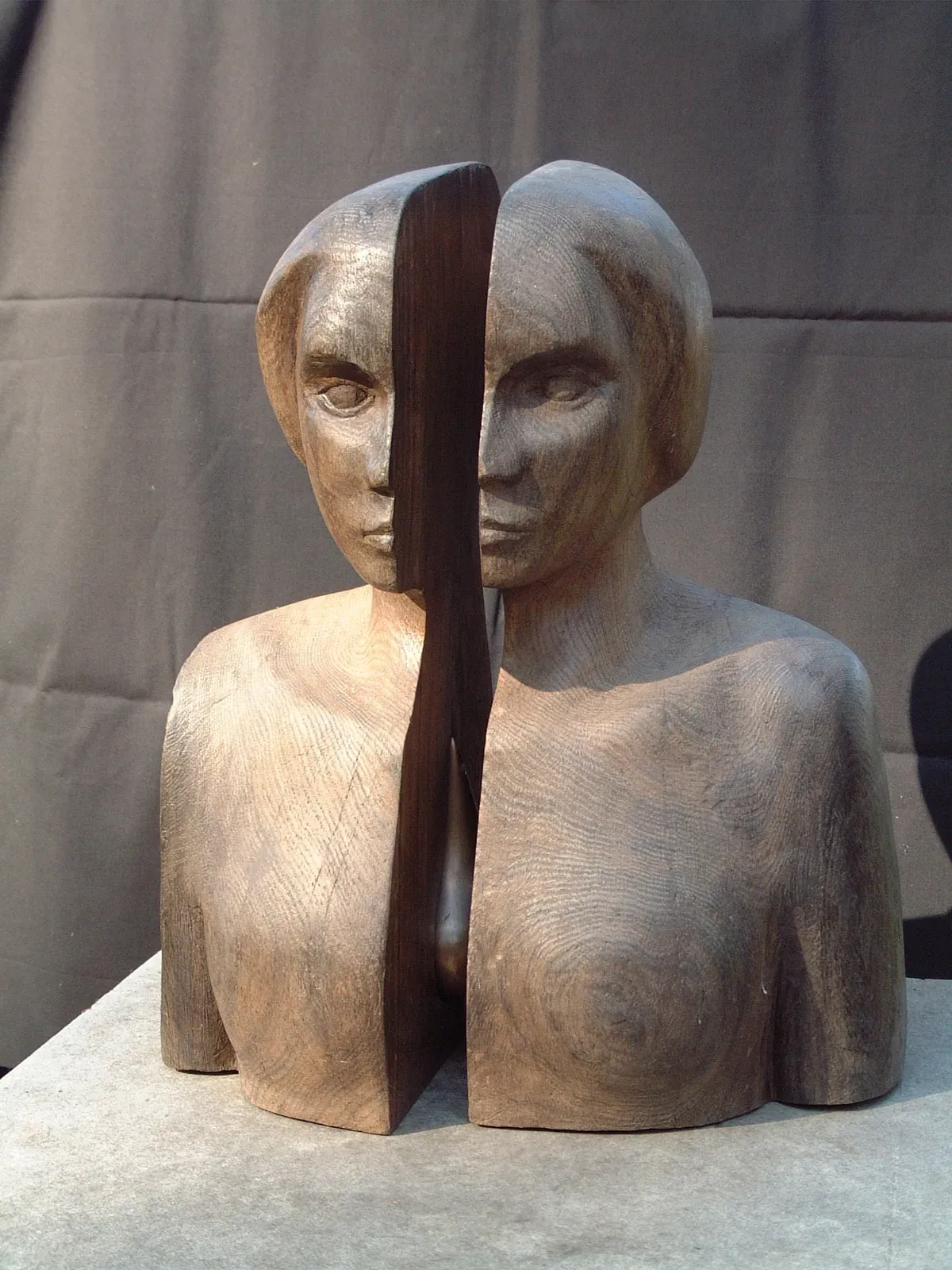
Muzeum Regionalne, SiedlceThe close of the series: the bust opens into two halves, each with its own face, and a dark drop stands in the gap. Material twin of Skupienie: same black oak, same height.
The states
1980–1999The two «Subiektywny» are born in 1980: faces closed, barred — and in one of them a single eye, unnaturally enlarged, watching from behind the barrier. It is the inner eye, the critics wrote: each of us looks at the world through the filter of our own experience, and full objectivity does not exist. The following year, at the XXXV National Jubilee Winter Salon of Art at Radom, the jury gives her a distinction «za rzeźbę pt. „Subiektywny”» — for the sculpture titled «Subiektywny». The diploma gives the title, not the work; the show’s catalogue, which reproduces the two woods under that title, tells us that those were the ones at Radom.
The Subjective lives twice. Small, in the two table bronzes that remain in a private collection; and large, in wood, in the two versions that entered the collections of the Centrum Rzeźby Polskiej in Orońsko — the ones that climb onto the plinths when the series goes on show. It is «Subiektywny II» that repeats the bronze to the letter: the same slab over the eyes, the same enlarged eye, mahogany and maple in place of the cast. One idea, two scales: one is held in the hand, the other is not.
Around these two grows a family of states, and the first is a pair that contradicts itself in the title: the «Rozdarty» — the Torn — is a chest tearing open; the «Scalona» — the Re-joined, 1981 — is a face divided into two offset halves, stitched with brass clamps. Trybowski lists them side by side. Then comes «Skupienie», the Recollection, with the bronze hands joined as in prayer inside the opening of the chest; and in 1997 «Zranione Ego», the Wounded Ego — a silhouette cut out of a cascade of flames, the ego larger than the figure. The series closes, in 1999, with «Nadzieja» — Hope: the bust opens into two halves, and in the gap between them sits a bronze sphere.
What holds the series together can be seen before it is read: the impersonal face, still, the same in all; and the surface of the wood brought to a mirror, so that the viewer is reflected in it — and the state on stage becomes, for a moment, their own.
- Subiektywny subjective
- Rozdarty torn
- Scalona re-joined
- Skupienie recollection
- Zranione Ego the wounded ego
- Nadzieja hope