Dyski
The discs · 1976–1999
A circle of bronze on a base of stone or wood: inside it, everything that can happen to an enclosed field — sprouting, cracking, opening, attacking. On the design sheets the disc is a field of variations that reappear in the bronzes.
The disc enters her work in 1976 as the attribute of the thrower — the Dyskobol singled out among the sport sculptures — and in the eighties it comes into its own: no longer the object of a gesture, but the field where the gesture happens.
The podium
The discs, each on its pedestal. The patina of the bronze — brown, golden, reddish — accompanies the variations of the form.
-
 Enter the room →
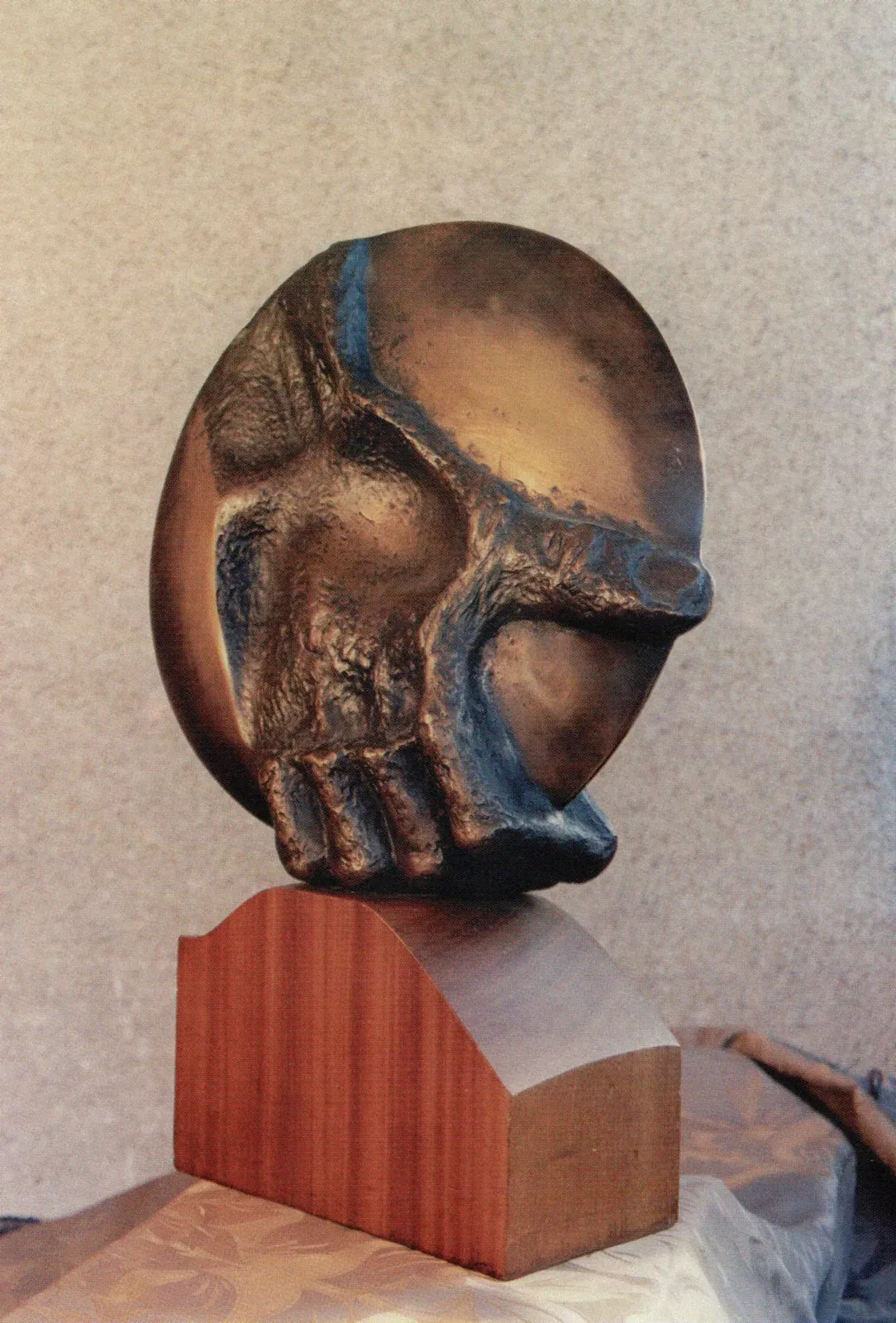
 AW.S.0118 Dyskobol
Discobolus1976 · bronze, mahogany
h 52 cm ·The prologue of the series: reproduced in the «Sport w Sztuce» catalogue.
-
 Open the catalogue entry →
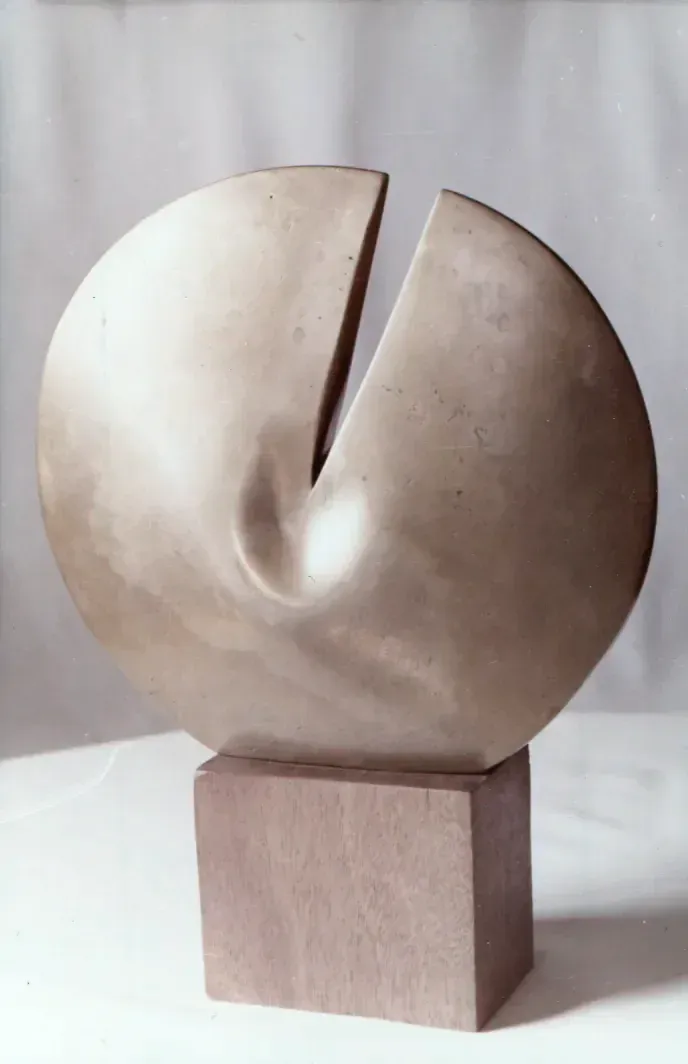
 AW.S.0134 Pisarzowi
To the writer1983 · bronze, granite base
25 × 40 × 8 cm · Poniatowski High School, WarsawGiven to the school in 2001; the cut in the disc ties it to the 1983 design sheets.
-
 Open the catalogue entry →
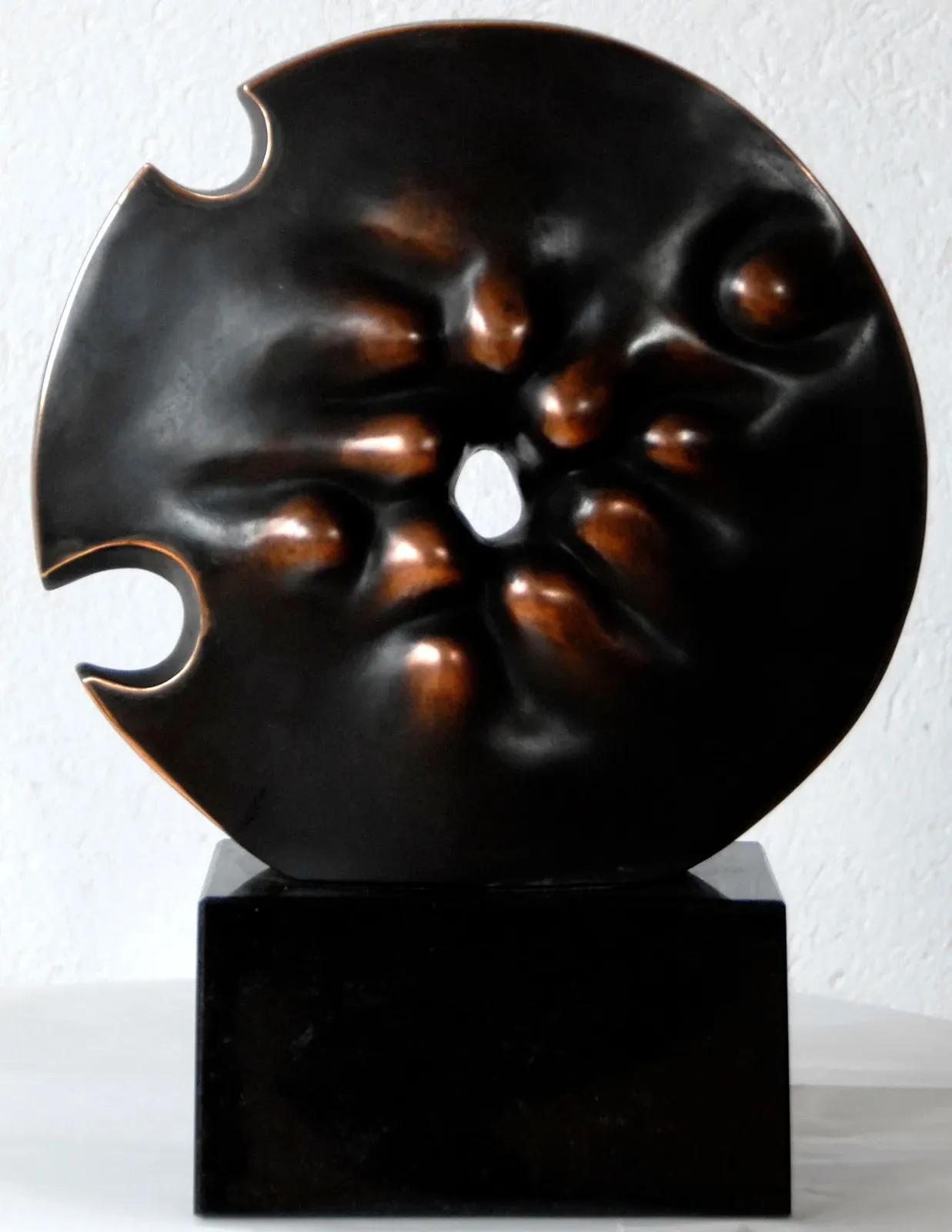
 AW.S.0005 Skupienie
Recollection1998 · bronze
24 × 9 × 30 cm · private collection -
 Enter the room →
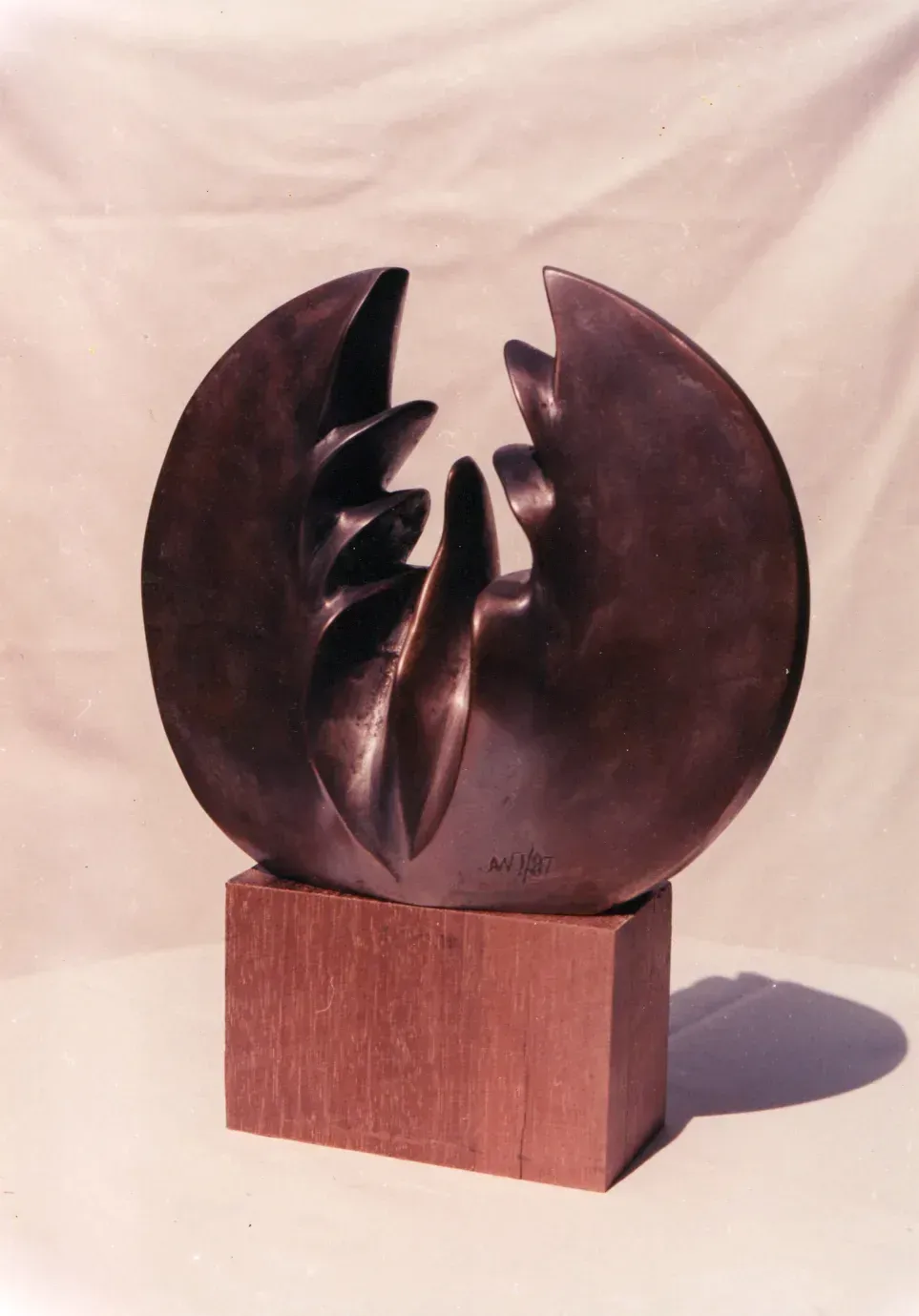
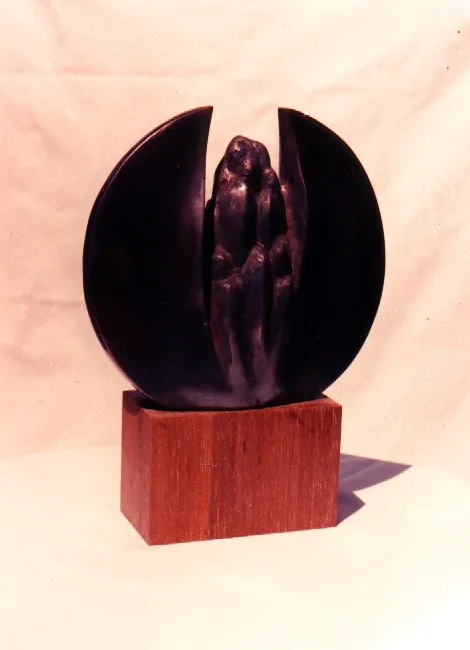
 AW.S.0030 Wzrastanie
Growth1988 · bronze
29 × 9 × 30 cm · private collectionShown in 1988 in Ravenna, at the “Biennale Internazionale del Bronzetto Dantesco” — the Dante small-bronze biennial — under the title «Fuoco».
-
 Open the catalogue entry →
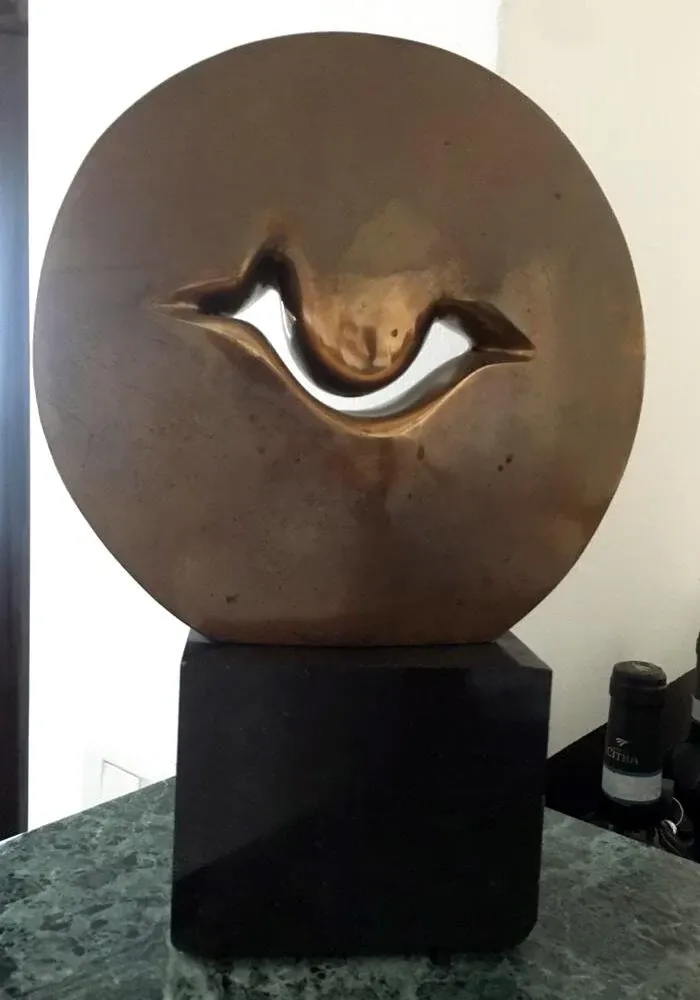
 AW.S.0045 Pączkowanie
Budding1998 · bronze
ø 30 cm · private collection -
 Open the catalogue entry →
 AW.S.0080 Zbliżenie
Approach1998 · bronze
ø 30 cm · private collection
On paper
1983–1984Between October 1983 and May 1984 Antonina fills four sheets with twenty-two designs for discs: almost all set up as sculptures, their bases ruled with a straightedge. The sheets make it possible to follow the variations of the form before the casting.
Under thirteen bases she writes the title, in pencil, in cursive. And the sheets do not stay sheets: Płacz and Oszczep — the weeping and the javelin — become works in that same year, 1983, brass and bronze on mahogany, cited by the critics and recorded in the catalogues of the time. It is the same season as the medallion for the twenty-five years of the TPSP: that too, in November 1983, begins with three pencil roundels on a slip of paper.
The cycle goes beyond the podium: Płacz and Oszczep, Nadzieja, Zbliżenie I and II belong to it as well.
- przetrwanie survival
- powstanie the rising
- przemijanie transience
- pękanie cracking
- przenikanie interpenetration
- atak attack
- rozstanie parting
- zbliżenie approach
- oszczep javelin
- jesień autumn
- osobisty wzrost personal growth
- płacz weeping
- sen na jawie waking dream